Table of contents
- Why Conversion Rate Optimization for Nigerian Business Websites Is No Longer Optional?
- Why Nigerian Businesses Are Losing Revenue to Websites That Don’t Convert?
- What Conversion Rate Optimization Actually Means for Your Nigerian Brand
- The Real Cost of Ignoring Website Conversion Improvement in Nigeria
- Improve Website Performance for Higher Conversions Nigeria: The First 30-Day Audit
- The Difference Between Regular and Conversion-Focused Websites for Nigerian Brands
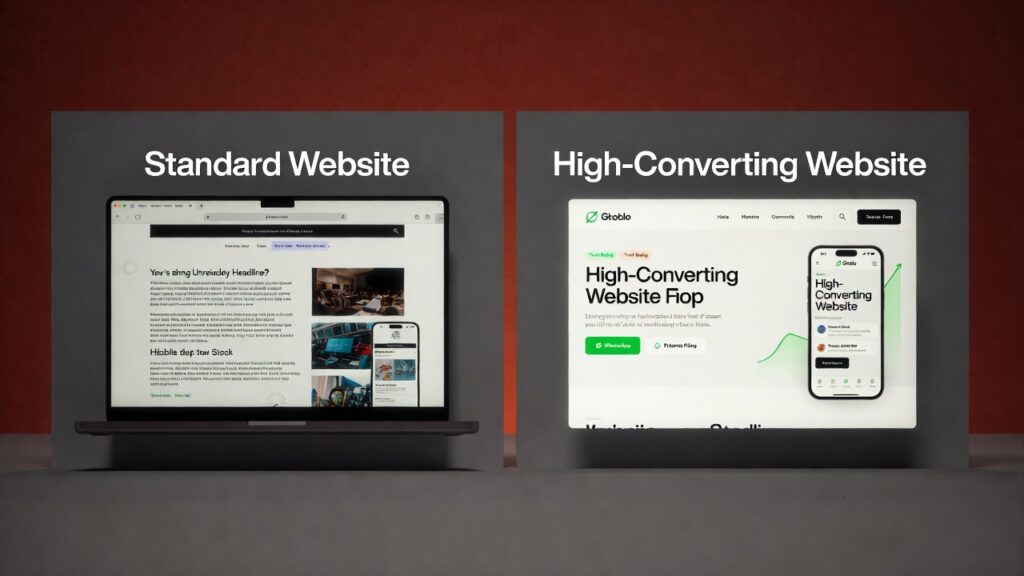
- Standard Website vs High-Converting Website Nigeria
- What Makes a Website Conversion Optimized: The 7 Non-Negotiable Features
- ROI of Conversion-Driven Web Design in Nigeria: Real Numbers, Real Business Outcomes
- Website Conversion Benefits for Nigerian Companies That Invest Early
- Final Thoughts
- FAQs
Traffic without conversion is wasted opportunity.
If you’re serious about turning visitors into customers, explore how we build conversion-focused websites.
Today, with over 122 million Nigerians online, your business can’t afford a website that’s just digital decor. A proper Nigerian business website should work while you sleep, eat, or chop life in traffic on the Third Mainland Bridge.
It should be your hardest-working employee, the one who never sleeps, never goes on strike, never demands annual leave, and never collects December bonus.
But most SMEs don’t realize their site is the problem. They blame ads and say “Facebook don change algorithm o!” Then they blame the economy.
“Since this fuel removal, nobody dey buy again.”
They blame everything except the fact that their website conversion rate in Nigeria numbers are probably sitting below 0.5%, half the global average.
Meanwhile, businesses with high-converting website design in Nigeria are out here closing deals at 2am while founders are dreaming.
At 2:17am last week, a client’s website sold three leather works to someone in Port Harcourt. The founder? Sleeping. The website? Working.
So what’s the difference between digital decoration and a 24/7 sales machine?
The journey from “just having a website” to “making money from your website” isn’t complicated, but it requires unlearning some things we Nigerian business owners convinced ourselves were true.
Let’s start by asking the right questions.
Why Conversion Rate Optimization for Nigerian Business Websites Is No Longer Optional?
Look, if you’re still thinking a website is just “online presence,” we need to talk.
That mindset is costing you real money, I mean naira you can touch, spend, and invest.
I’m not talking about “potential revenue” or “future opportunities.” I mean cash that should be in your account today, paying your rent, stocking your inventory, settling your children’s school fees.
Remember when having a Facebook page made you a “digital business”? Those days don buy market. Today, your website is either a revenue-generating asset or a liability.
There’s no middle ground for CRO Nigeria conversations anymore. Either your site sells, or it costs you. It’s that simple.
Let me share something that still haunts me. In 2021, I consulted for a catering business in Abuja. Beautiful operation, weddings, corporate events, small chops, the whole package. Their website showed up on page one of Google for “caterers in Abuja.” They had thousands of visitors monthly.
But when I checked their analytics? I saw zero form submissions in six months. And no inquiry from all that traffic.
The owner told me, “Maybe our industry does not work online.” Meanwhile, her competitors were catering three events every weekend.
The difference? They had websites designed to convert. Hers was designed to exist. Big difference, my friend.
Why Nigerian Businesses Are Losing Revenue to Websites That Don’t Convert?
Let me paint a picture you’ll recognize.
A friend, Mr. Eze runs a furniture business in Ikeja. Beautiful pieces, solid wood with fair prices. He spent ₦450,000 on a website in 2023. The full e-commerce websites had product galleries, custom photography and professional copywriting.
He even paid extra for a “premium theme” because the developer said it would make him look like IKEA.
Six months later? Twelve online orders. Twelve! That’s less than one sale per week for a business with 8,000 monthly visitors. When I asked to see his analytics, the problem was obvious.
His site took 8 seconds to load on mobile. The “Add to Cart” button was gray on gray and barely visible. The checkout required creating an account. And payment? Only card, no bank transfer option, no Paystack quick link.
Hhmm… Na wa o.
The thing is, if your competitor gets the same 10,000 monthly visitors but converts at 3%, they’re getting 300 customers. At 0.5%, you’re getting 50. Same traffic, same market and same opportunity. But their website works. Yours? dey pose.
A regular Nigerian business website gets traffic but treats all visitors like strangers at a bus stop. No direction and reason to stay. Someone lands on your site, scrolls for 8 seconds, and leaves.
But you paid for that click through ads or SEO effort… yeah. You also hosted that visit and still got nothing. It’s like renting a shop in the busiest market in Lagos, stocking it with goods, but leaving the door locked.
People pass, they see, they move on.

What Conversion Rate Optimization Actually Means for Your Nigerian Brand
Conversion rate optimization in Nigeria isn’t redesigned and neither is it making things “look pretty.” It’s not adding animations or following the latest Webflow trends.
What matters is the science of turning more of your existing traffic into paying customers without spending one extra kobo on ads.
Imagine for a second, if your shop gets 100 walk-ins daily and only 2 people buy, you don’t immediately run outside shouting for more people. That would be wasteful, and you’d just attract more people who would also not buy.
Instead, you fix what’s happening inside. Maybe your salesperson sleeps at the counter, prices aren’t displayed, customers can’t find what they need and maybe the shop smells funny (yes, online experiences have smells too, with confusing navigation, broken links, and slow loading).
CRO strategies for Nigerian websites focus on:
Clear calls-to-action: that scream “click me” (not whisper). Your “Buy Now” button shouldn’t blend into the background like a chameleon on green leaves.
It should shout, “Click me! I’m here! Let’s do business!”
Trust signal: In Nigeria, trust is everything. If customers don’t trust you, they won’t buy. Period. Testimonials with real faces, photos of your physical location, media mentions, and recognizable payment badges are the important factors to consider.
Local payment options: Paystack, Flutterwave, bank transfers. Card-only sites lose customers daily. Many Nigerians prefer transferring money because it feels safer, more controlled.
Page speed: You know those afternoons when data moves like snail with arthritis? Your site must load anyway, no excuses.
The Real Cost of Ignoring Website Conversion Improvement in Nigeria
Let’s talk about money because this is where emotion meets reality. And frankly, Nigerian business owners understand money language best. We’ve learned to be skeptical of “visibility”, “awareness” and “brand building.”
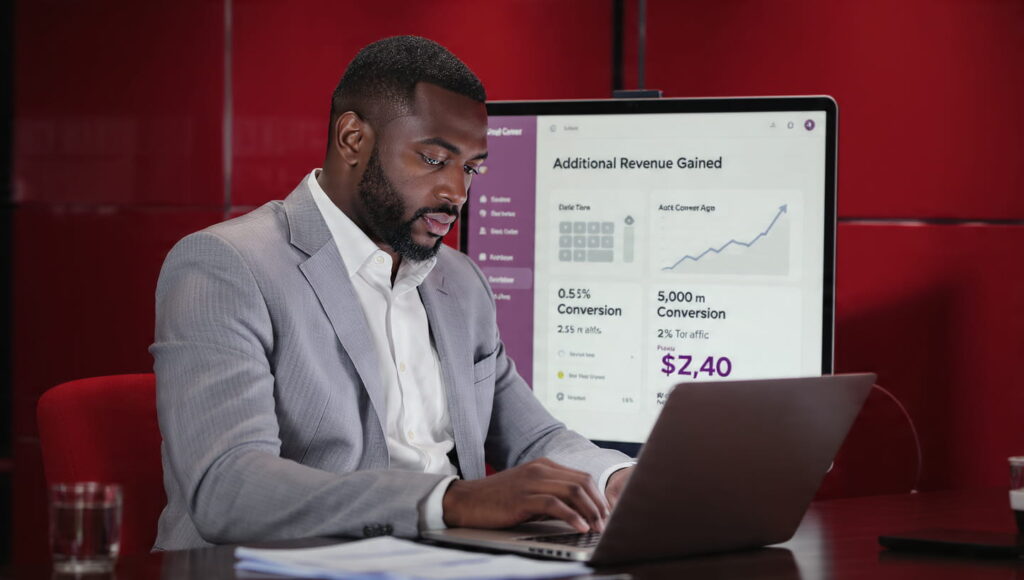
Imagine a Lagos restaurant gets 5,000 website visitors monthly by visitors checking the menu, location, and catering services and the current website conversion rate Nigeria sits at 0.8%, roughly 40 leads or orders monthly.
Not terrible. But not great either.
Now imagine investing in website conversion improvement, fixing load times, adding WhatsApp ordering, displaying testimonials from real customers with their photos and names, clarifying your menu with prices, and adding an easy booking system. The rate now climbs to 2.5%. The same 5,000 visitors now produce 125 leads.
That’s 85 extra opportunities monthly with zero additional ad spend.
If each lead averages ₦25,000 in value, then we’re talking ₦2.125 million in additional monthly revenue. Annually? Over ₦25.5 million.
The CRO(Conversion Rate Optimization) ROI conversation isn’t abstract. It’s your children’s school fees. Your business expansion and your ability to hire that extra staff so you can finally rest on Sundays. Make sense?
Poor website UX in Nigeria costs businesses millions silently. Visitors who bounce don’t complain. They don’t send angry emails. They don’t tell you why they left. They just disappear into the digital wind like harmattan dust. And you keep paying for ads, hosting, and maintenance while wondering why results don’t show.
A business with 10,000 monthly visitors at 0.5% conversion gets 50 customers. Same traffic at 2% gets 200 customers. The only difference? Is whether you treated website performance in Nigeria as priority or afterthought.
Improve Website Performance for Higher Conversions Nigeria: The First 30-Day Audit
If you’re ready to stop losing money, here’s your starter kit, a practical 30-day website audit checklist tailored for the Nigerian market. It contain real steps any business owner can take or delegate.
Let’s look at how the whole process works.
Technical Foundation (Days 1-7)
Check your page speed on Google’s PageSpeed Insights (free tool). If the mobile score is below 70, you’re losing visitors daily. Nigerian networks fluctuate, and your site must load under 3 seconds even on bad days.
What to fix: Compress all images using TinyPNG or ShortPixel. Reduce plugins, and enable caching. Consider switching to Nigerian hosting for local speed advantages, servers in Lagos load faster for Nigerian visitors than servers in London or US.
User Behavior Analysis (Days 8-14)
Install free tools like Microsoft Clarity or Hotjar. Watch recordings of real visitors, where do they stop? Where do they click things that aren’t buttons? Where do they get confused and leave?
One client discovered visitors repeatedly clicked their logo expecting to return home, but the logo wasn’t linked. Small thing, big impact. Another saw visitors abandoning forms at the “Confirm Email” field.
Turns out, Nigerians don’t understand why they need to type email twice. Removed that field, conversions increased 15%. You can’t fix what you don’t see.
Also check your analytics: bounce rate above 60%? Problem. Time on page under 30 seconds? Problem. Exit pages showing your “Contact” page as top exit? Major problem means people reach out but don’t follow through.
Conversion Pathway Audit (Days 15-21)
Can visitors contact you within two clicks? Is your WhatsApp button visible on mobile without scrolling? Do forms ask for too much information? Nigerian users hate typing on phones, our fingers are big, screens are small, patience is limited.
Reduce form fields to absolute essentials: Name, Phone, Message. That’s it. You don’t need a company name, website, how they heard about you, what their favorite color is. Abeg, leave story.
Add click-to-call buttons for phone numbers. Test every link on mobile. Test on different networks, like MTN, Glo, and Airtel. What loads fast on your office WiFi might crawl on someone’s 3G in Yola.
Check your payment flow: Can customers pay with bank transfer? Is Paystack/Flutterwave integrated properly? Does the payment confirmation page show clearly what happens next? Confusion after payment leads to anxiety which leads to chargebacks then headaches.
Test and Implement (Days 22-30)
Run A/B tests on your main call-to-action. Try “Get Free Quote” versus “Chat on WhatsApp.” Try green buttons versus orange buttons (orange often wins in Nigeria as it stands out against our preferred color schemes). Try short forms versus shorter forms.
Test headlines: “Professional Web Design Lagos” versus “Get More Customers with a Website That Actually Sells.” Which resonates more? Test offers: “10% Discount” versus “Free Consultation.” Nigerian markets respond differently to different triggers.
Let data, not ego, decide what works for improving leads with optimized website in Nigeria. I’ve seen business owners insist on certain designs because “I like it,” while data clearly shows visitors prefer something else. Your opinion doesn’t pay the bills. Customer behavior does.
After 30 days, you’ll have a clear picture of what’s working, what’s leaking, and what fixing will deliver the fastest return. Some fixes cost nothing but time. Others require investment. But now you know, and knowing is half the battle.
The Difference Between Regular and Conversion-Focused Websites for Nigerian Brands
This part might ruffle some feathers, but somebody must talk. Having a website doesn’t mean you have a business website.
There’s a difference like the one between a Danfo driver and a private chauffeur. Both drive, but Mehn… the experience? Different level entirely.
I remember visiting a client in Ikeja sometime in 2022. Nice woman, runs a thriving catering business. She pulled out her phone, excited to show me the website she’d just paid ₦350,000 for. “Look am, e fine abi?” she asked, beaming.
The site was beautiful. Animated logos, parallax scrolling, and fade-in effects everywhere. But when she tried to show me her menu on her own phone?
E no gree open.
We waited, and waited, and waited. Until 12 seconds later, the menu appeared, but the “Order Now” button was hiding somewhere below, invisible without scrolling.
“Do people order from this?” I asked gently.
Her face fell. “Actually… no. I thought maybe my food no dey sell online.”
My sister, your food dey sell. Na your website no dey sell.
That’s the painful reality across Nigeria right now. There are thousands of businesses with beautiful websites that do absolutely nothing for their revenue.
Standard Website vs High-Converting Website Nigeria
Online, the difference is even starker because visitors have zero patience. In a physical shop, you might wait for the assistant to finish the phone call.
But Online? One second delay and they’re gone forever.
A standard website treats all visitors exactly the same. Someone looking for pricing gets the same experience as someone checking business hours. No guidance. No journey. No sale.
It’s like having a shop where every customer enters and you simply point vaguely around the room.
A conversion-focused website in Nigeria understands something fundamental: different visitors need different things. A first-time visitor needs trust signals and social proof, “Who are these people? Are they reliable?”
Meanwhile a returning visitor needs pricing and booking options, “I remember this place, just show me what I came for.” A ready-to-buy visitor needs checkout fast and simple.
Think about Jumia. When you visit, you see personalized recommendations based on your browsing history. Items you viewed still sitting in the cart. “Customers who bought this also bought…” suggestions. Why? Because they’ve spent millions studying website user experience and Nigeria patterns.
They know you’re not the same person as the next visitor. They know that if you looked at phones yesterday, you probably don’t want to see kitchen utensils today.
Your SME site can’t afford millions in research. But you can afford basic segmentation:
Clear paths for new vs returning visitors: New visitors get explanations, testimonials, trust signals. Returning visitors get straight to business, pricing, booking, checkout.
Different CTAs for different pages: Your homepage CTA might be “Learn More” or “See Services.” Your service page CTA should be “Book Now” or “Get Quote.” Your blog post CTA might be “Subscribe for Updates” or “Download Free Guide.” Match the CTA to visitor intent.
Exit-intent popups offering discounts: These work well with Nigerian audiences. Omo, we love discounts! When someone moves the mouse to leave, pop up a “Wait! 10% off your first order” message. It captures 5-10% of leaving visitors who would otherwise vanish forever.
A regular website costs you money every single day it exists, hosting fees, maintenance costs, and the opportunity cost of lost sales. A results-driven website in Nigeria makes you money every single day it exists, while you sleep, while you’re stuck in traffic, and even at your children’s school play.
The difference isn’t complexity, it’s strategy. It’s understanding that your website isn’t your online brochure, but your hardest-working employee.
What Makes a Website Conversion Optimized: The 7 Non-Negotiable Features
After building and fixing dozens of Nigerian business sites over the past six years, I’ve identified seven features that separate decoration from destination. These aren’t nice-to-haves, but must-haves. If your site lacks any of these, you’re leaving money on the table, probably lots of it.
1. Above-the-fold clarity
When a Nigerian visitor lands on your site, they should know within 3 seconds: who you are, what you sell, and what to do next. No puzzles or “creative” navigation that hides everything behind hamburger menus (those three lines people click and sadly most Nigerian users don’t even know what they mean).
Test this yourself: Load your website on a phone. Hand it to someone who’s never seen it before.
Ask three questions without letting them scroll: “Who owns this business? What do they sell? What should I do if I want to buy?” If they can’t answer immediately, your above-the-fold fails.
Your headline must communicate value immediately. “Luxury 4-Bedroom Duplexes in Ikoyi, starting at ₦120M.” “Professional Catering Services for Lagos Events, Free Tasting Available.” and “Digital Marketing Agency That Gets You More Customers, Book Free Consultation.”
2. Mobile-first design
Over 80% of Nigerian web traffic happens on mobile phones. Not tablets (less than 3%), and not desktops (about 15%).
If your desktop site looks beautiful but the mobile version requires pinching, zooming, and squinting? You’re excluding 8 out of 10 potential customers. They won’t pinch and zoom, and they won’t struggle either.
They’ll leave and find someone whose site respects their device.
Mobile-first doesn’t just mean “works on mobile.” It means designed for mobile from the ground up. Buttons big enough for thumbs (at least 44×44 pixels). Text readable without zooming (minimum 16px font size), no hover effects and forms that auto-populate with mobile keyboards.
3. Social proof and trust triggers
Nigerians are skeptical people. We’ve been scammed before, and we know “too good to be true” usually means “too good to be true.” So when someone lands on your site, their brain automatically asks: “Who is this? Are they reliable? Are they going to run away with my money?
These are real questions in customers’ minds. And your site must answer them immediately.
Display testimonials with real names, real photos, and real results. Not “John D.” with a silhouette avatar and not “Client from Lagos” with no face. You need to display real people, and real stories.
Show media mentions if you have them. An example could be: “As featured in Guardian, Techpoint, Business Day.” and partner logos.
Client count numbers: “500+ happy clients since 2020.” Case studies with actual numbers, Before/after results and video testimonials.
Trust isn’t assumed online. It must be demonstrated and every single page should answer the question: “Why should I trust you?”
4. Multiple conversion pathways
Different Nigerians prefer different ways of doing business. Some want to call immediately, they’re ready to talk, ask questions, and hear your voice. Some prefer WhatsApp, because it’s casual, familiar, and doesn’t require formal phone etiquette.
Most people want to fill forms, they’re detail-oriented, and want everything documented. While others just want to browse first, they’re researching, not ready to commit.
A high-converting website design in Nigeria accommodates all preferences:
WhatsApp click-to-chat button: Visible on every page, especially on mobile. One tap opens WhatsApp with a pre-filled message like “Hello, I’m interested in your services from your website.” Makes it easy like Sunday morning.
Phone number that clicks to call: On mobile, tapping should initiate the call immediately, not show a number to copy and paste.
Contact form: Simple, short, mobile-friendly. Name, phone, message. That’s enough for initial contact.
Lead magnet: Free guide, discount code, checklist, consultation, and give something valuable enough to make visitors share email or WhatsApp to receive it.
Live chat (if possible): Tools like Tidio or WhatsApp Business API allow real-time chat and it works well for businesses with dedicated salespeople.
Give people options and they’ll choose their comfort zone. Force them into one path and many will simply leave.
5. Fast load time optimized for Nigerian networks
Many Nigerians still browse on 3G. Some areas drop to 2G. MTN can be fast in Lagos at 2pm but crawl in Port Harcourt at 5pm. Glo works beautifully in some areas, and struggles in others, Airtel fluctuates and 9Mobile… Well, we don’t talk about 9Mobile.
If your site loads 5MB of images, videos, scripts, and animations, you’re asking customers to wait 10-15 seconds. They won’t and they’ll go to your competitor whose site loads in 2 seconds.
Google research shows 53% of mobile visitors leave sites taking over 3 seconds to load. In Nigeria, with our network challenges, that threshold might be even lower.
What to do:
Compress images: Use tools like TinyPNG. Reduce file sizes by 60-80% without visible quality loss.
Minimize code: Remove unnecessary CSS, JavaScript, plugins. Every line of code adds load time.
Use caching: Store static files so returning visitors load faster.
Choose Nigerian hosting: Servers in Lagos load faster for Nigerian visitors than servers in London, Amsterdam, or US. Look for hosting providers with Nigerian data centers.
Lazy load images: Images below the fold load only when the user scrolls to them.
6. Conversion-focused copy
Generic copy sells to nobody. “We are a leading provider of excellence in the industry” means absolutely nothing to a Lagos business owner. It’s verbal cotton candy, feels like something but dissolves into nothing.
Instead, try: “Get your professional logo delivered in 24 hours, ₦35,000 only. 100+ happy business owners already trusted us.” Sounds specific, clear, and urgent.
Conversion-focused copy:
- Speaks to pain points: “Tired of websites that don’t sell?” instead of “We offer web design services.”
- Uses Nigerian English naturally: “Your customers are searching for you. Let them find you.” (Not forced, just natural)
- Includes specifics: Numbers, prices, timelines, guarantees. Specifics build trust.
- Addresses objections: “No technical skills needed—we handle everything.” “Safe and secure payments with Paystack.”
- Creates urgency: “Limited spots available monthly.” “Price increases soon.” “Only 5 slots left this month.”
7. Analytics and conversion tracking
What gets measured gets improved. What doesn’t get measured stays broken forever.
Here’s how to go about the whole process
Install Google Analytics (free) and set up Goals for:
- Form submissions
- WhatsApp clicks (using URL parameters like ?text= to track)
- Phone call clicks (tel: links as events)
- Newsletter signups
- Purchases
Connect Facebook Pixel if you run ads. Install Google Tag Manager for advanced tracking. Use heatmap tools like Hotjar or Microsoft Clarity to see where people click, scroll, and get stuck.
When you know your numbers, you stop guessing and start growing. You’ll see exactly which pages convert and which pages leak visitors. Which traffic sources deliver customers, which devices perform best and which time of day convert most.
Why Basic Websites Fail to Convert in Nigeria: The 5 Structural Gaps?
After auditing over 100 Nigerian business websites in the past few years, patterns emerge.
These five gaps kill conversions consistently. If your site struggles, check these first.
Gap 1: No clear offer
If after I visited your site, read your homepage, and still don’t know exactly what you sell, to whom, or at what price. Then please, what are you selling?
If visitors ask “What exactly do they do?” after 10 seconds on your site, you’ve already lost most of them. They won’t dig through your About page or Services menu. They’ll leave and find someone who states their offer clearly.
Fix this immediately. Your homepage headline should complete this sentence: “We help [specific audience] achieve [specific result] through [specific service].” Everything else supports that core message.
Gap 2: Trust deficit
When you have no testimonials, team photos, physical address, verifiable track record, case studies and even no media mentions and social proof whatsoever.
You give room for visitors to leave immediately after visiting your website.
In a country where advance fee fraud sadly exists, anonymity kills trust. People need to know you’re real before they’ll send you money.
Show yourself, display your work, happy customers, your office or studio and show your team (even if it’s just you).
Gap 3: Wrong audience targeting
Writing for everyone means connecting with no one. If your copy speaks to “businesses seeking growth,” you’re invisible. Too generic, too vague, too forgettable.
If it speaks to “Lagos caterers needing more wedding bookings by next month,” now you’re talking to someone specific. They think, “This person understands my problem!” They pay attention, trust you more and they’re more likely to buy.
Niche down in your messaging even if your services are broad. Speak to one specific audience at a time.
Use their language, address their specific pain points and show you understand their world.
Gap 4: No follow-up mechanism
When visitors leave without giving their email, no WhatsApp opt-in, and without any way to reach them later.
They will leave after looking around and sadly you have no way to bring them back.
This is tragic because most people don’t buy on their first visit.
Research shows it takes 7-13 touchpoints before most customers convert. If you’re not capturing contact information, you’re losing 90%+ of potential customers forever.
Add lead magnets: free guides, discount codes, email newsletters, and WhatsApp broadcast opt-ins. Build your list, follow up consistently and you’ll surely convert over time.
Gap 5: Desktop-optimized design that breaks on mobile
The biggest killer is a site built on a MacBook screen that looks chaotic on Tecno or Infinix phones. With buttons too small to tap, text unreadable, Images overflowing and Navigation menus that don’t work, your potential prospect will leave right away.
Nigerian internet is mobile-first. Which means Nigerian business must be mobile-first too.
Test everything on actual phones, different networks, real users, and not just browser developer tools.
ROI of Conversion-Driven Web Design in Nigeria: Real Numbers, Real Business Outcomes
This is the profitable part, where we connect website decisions to actual business outcomes. Where we move from “having a website” to “making money from your website.”
I’ve noticed something about Nigerian business owners. We’ll spend ₦500,000 on a website without blinking, pay monthly retainers, and invest in ads. But ask us, “What’s your conversion rate?” and suddenly everyone becomes quiet.
Meanwhile, that same developer hasn’t checked analytics in six months. The site is live and traffic is coming.
But whether that traffic becomes customers? Nobody knows.
It’s like running a shop blindfolded, you hear people entering, you hear them moving around, but you have no idea if they’re buying or just browsing or stealing.
The ROI of conversion-driven web design in Nigeria isn’t complicated. It’s simple math. Better site = more customers from same traffic = more profit without more ads spend.
Website Conversion Benefits for Nigerian Companies That Invest Early
Early adopters in any market win disproportionately. In Nigeria’s digital space, businesses investing in conversion rate optimization Nigeria now gain advantages that latecomers will struggle to catch.
And these are some of the benefits of optimizing your website for optimal conversion.
1. SEO advantage that compounds
Google watches how users interact with sites. It’s not just about keywords anymore, it’s about user experience signals. Low bounce rates, high time-on-page, strong mobile UX, and return visits. All these send positive signals that Google interprets as “this site provides value.”
An optimized SEO website in Nigeria with good conversion metrics ranks higher naturally.
Higher rankings bring more free traffic. More free traffic means more opportunities to convert. It’s a virtuous cycle that compounds over time.
2. Brand authority advantage that builds trust
When potential clients visit a professional, fast, clear website, they assume the business itself is professional, fast, and clear. Perception shapes reality.
A sales-driven website design for Nigerian brands signals credibility before you speak a single word.
Think about your own behavior. When you visit two businesses’ sites, one modern, fast, clear, trustworthy: another slow, confusing, and outdated.
Which do you trust more? Which would you rather give money to? The answer is obvious. Your customers feel the same way.
A conversion-optimized site isn’t just a sales tool. It’s a credibility signal. It tells visitors, “We’re serious about our business. We respect your time and we’ve invested in your experience.” That matters, especially in Nigeria where trust is scarce.
3. Competitive moat advantage that protects market share
By investing in website redesign in Nigeria focused on results, you separate yourself from 80% of competitors still stuck in 2015 thinking. You build a moat around your market.
New competitors emerge, but they can’t match your conversion rates immediately. They have to learn what took you months or years to figure out.
I’ve seen this play out in multiple industries, real estate, fashion, consulting, education. The first mover in conversion optimization dominates the market for 2-3 years before others catch up.
By then, they’ve built brand recognition, customer loyalty, and enough cash flow to stay ahead.
4. Cost efficiency advantage that improves margins
Businesses with higher conversion rates can afford to spend more on customer acquisition. They can bid higher on Google Ads, outspend competitors on Meta, offer better affiliate commissions. While their competitors, stuck with low conversion rates, can’t compete profitably.
This creates a winner-take-most dynamic in many niches. The businesses with optimized sites capture disproportionate market share while competitors struggle with unprofitable ads and declining organic reach.
Final Thoughts
We’ve been doing this for years now. Built sites for fashion brands in Lagos, real estate developers in Abuja, and consultants in Port Harcourt.
And here’s what we’ve learned after all these years, after all these projects, and conversations with frustrated business owners:
Nigerian businesses don’t need more websites, what we need is better websites.
We’re saturated with digital decorations. Sites that look beautiful on designers’ portfolios but generate exactly zero business value. We have sites that cost millions but deliver nothing, and site owners are embarrassed to show them because nothing is working.
The problem isn’t that Nigerians won’t buy online. We buy like crazy, from Jumia, from Konga, from Instagram sellers, and even from WhatsApp groups. We spend billions monthly across digital channels. The problem is that your site isn’t giving us reason to buy from you.
A conversion-optimized website in Nigeria isn’t a luxury. It’s not “nice to have” when budget permits. It’s the difference between:
- Paying for traffic and profiting from it,
- Having digital presence and digital revenue
- Hoping customers find you and building a system that finds, persuades, and closes them automatically
The businesses winning in Nigeria’s digital space aren’t necessarily the ones with biggest budgets or most famous brands. They’re the ones who understand a fundamental truth: traffic without conversion is just expensive decoration.
They invest in website conversion rate Nigeria improvement because they’ve done the math. They know that doubling conversions is often easier, and always cheaper, than doubling traffic. They know that a 1% improvement in conversion can be worth more than a 50% increase in ad spend, and they know that their website isn’t an expense, but their most valuable asset.
The question now isn’t “should I optimize?” It’s “how much longer can I afford not to?”
Every month you wait is another month of lost revenue. Another month of competitors eating your lunch. Another month of paying for traffic that doesn’t convert, and another month of opportunity cost that never returns.
The good news? You can start today. Not next month, and not “when things settle.”
Run that self-audit, install those analytics, add the whatsApp integration, and gather the testimonials.
And if you want a partner who’s done this hundreds of times, who knows what works in Nigeria, what doesn’t, and why, you know where to find us.
Sizzle Digital offers a free website audit for Nigerian businesses. No pressure. No complicated sales talk. We just provide honest feedback on what’s working, what’s leaking, and what ₦1 in optimization can return.
We’ll review your site, analyze your analytics, identify quick wins, and give you a roadmap, whether you work with us or not.
FAQs
A conversion-optimized website is designed to turn visitors into customers, not just look pretty. Every element serves a purpose: headlines grab attention, copy persuades, buttons invite clicks, forms capture leads, trust signals reduce skepticism. In Nigerian context, this means mobile optimization for 80%+ phone users, WhatsApp integration, fast loading on local networks, and payment options customers actually use. It’s a sales machine that works 24/7, not digital decoration.
Costs vary by complexity. Basic conversion-focused sites (5-10 pages) range ₦350,000–₦650,000. Mid-range with e-commerce (10-20 pages) runs ₦650,000–₦1.2 million. Advanced sites with full functionality are ₦1.2 million–₦3.5 million. Monthly retainers for maintenance run ₦80,000–₦250,000. Compare this to what you lose monthly from a non-converting site, a ₦1 million investment paying for itself in weeks makes business sense.
Quality conversion sites take 8-12 weeks for most SME projects. Week 1-2: discovery and strategy. Week 2-4: design and copywriting. Week 4-8: development. Week 8-10: testing and refinement. Week 10-12: launch and initial optimization. If someone promises one week, run. Proper research into your audience, competitors, and customer psychology takes time. Rushed projects rarely convert well.
Absolutely. Quick wins cost little: improve page speed, add WhatsApp button, simplify forms, strengthen testimonials with photos, clarify headlines, fix mobile issues. Medium-effort improvements: rewrite key pages with conversion copy, add exit popups, implement analytics, create lead magnets. Rebuild only if your site is outdated technology, not mobile-responsive, or you can’t make necessary changes. Start with what you have, measure results, and invest more where it delivers.
Nigerian SMEs average 0.3%–0.8% before optimization. After proper work, realistic targets: service businesses 3%–8%, e-commerce 1.5%–3.5%, real estate 1%–3%, professional services 2%–5%. Top performers hit 5%–10%+ depending on industry and traffic quality. The key isn’t comparing to global averages but improving your own numbers. If you’re at 0.5% today and hit 1.5% in three months, you’ve tripled revenue from the same traffic.
Install Google Analytics 4 and set up Goals for form submissions, button clicks, purchases. Add Google Search Console for SEO insights. Use Facebook Pixel if running ads. Track WhatsApp clicks with URL parameters. Install Microsoft Clarity or Hotjar for heatmaps and visitor recordings. Set up a simple dashboard showing visitors, conversion rate by source, revenue generated, top pages, device breakdown. Review weekly and act on data. You can’t improve what you don’t measure.
Over 80% of Nigerian internet users access the web via mobile phones. Not tablets. Not desktops. Phones with small screens and thumbs doing the clicking. If your site requires pinching, zooming, or squinting on a Tecno or Infinix, you’re invisible to most customers. Mobile optimization means thumb-friendly buttons, readable text without zooming, fast loading on 3G/4G, click-to-call functionality, and WhatsApp buttons visible without scrolling. Test your site on your phone now, on data, not WiFi.
Google research shows 53% of mobile visitors leave sites taking over 3 seconds to load. In Nigeria with variable networks, every second costs customers. A 1-second delay can reduce conversions by 7%. For a business doing ₦5 million monthly online, that’s ₦350,000 lost monthly to speed alone. Compress images, minimize plugins, enable caching, use Nigerian hosting, remove auto-play videos. Speed isn’t technical, but financial. Every millisecond matters when customers decide in seconds.
Very Massive. Nigerians are skeptical and community-oriented. Before buying, we ask friends, check reviews, look for testimonials from people “like us.” Displaying real testimonials with photos, names, and specific results increases trust and conversions. Video testimonials work even better. Case studies with actual numbers demonstrate credibility, and media mentions build authority. One client can add real testimonials with photos and conversions increased 34% in one month. If you’re not displaying social proof, you’re leaving money on the table.
Emphatically yes. WhatsApp is Nigeria’s primary business communication channel. You can add click-to-chat buttons that open WhatsApp directly with pre-filled messages. Make them visible on mobile without scrolling (floating button works best). Track with URL parameters. Many Nigerian businesses generate 60-70% of leads through WhatsApp. One client added a WhatsApp button and nothing else, conversions increased 40% in one month. It’s free, familiar, and converts. This isn’t optional anymore.
If visitors can’t pay how they want, they won’t pay at all. Nigerians prefer bank transfer (feels safer) and card payments (growing). Integrate Paystack and Flutterwave, display their badges for trust. Offer multiple payment methods, and don’t force card-only. Display bank transfer details clearly. Ensure checkout is mobile-optimized and requires no account creation. Test your checkout flow regularly by buying something yourself. Payment friction is the #1 cart abandonment cause.
Blogs attract organic traffic through SEO, answer customer questions, build authority, and address objections before they prevent sales. But blogs convert best when they include relevant calls-to-action: subscribe for updates, download related guides, contact for consultation, and view related products. Write for your ideal customer, address their specific pain points, and guide them toward next steps. Don’t let blog visitors read and leave without direction. Guide them toward conversion while providing value.
Content updates (blog posts, testimonials, case studies): monthly minimum. Design refreshes: every 2-3 years. Conversion optimization: continuous, test headlines monthly, monitor analytics weekly, review user recordings regularly. Technical updates: monthly for security, immediate for critical patches. The market changes, competitors emerge, customer behavior evolves. Your site should evolve too. A site that worked in 2022 might underperform in 2026. Stay curious, stay testing, stay improving.
We don’t build websites for compliments; we build them for results. Our process starts with your business goals, not color preferences. We study your customers, analyze competitors, identify conversion barriers, and build systematically for performance. Every decision serves one purpose: turning visitors into customers. We understand the Nigerian context, behavior, networks, payments, trust dynamics, and not generic “best practices.”