Table of contents
- Should Nigerian Businesses Use Custom Websites or Templates?
- What Is the Real Difference Between Custom and Template Websites in Nigeria?
- Is Custom Web Design Worth It for Nigerian Startups and Small Businesses?
- When to Choose a Custom Site Over a Theme in Nigeria?
- Advantages and Disadvantages of Custom Websites vs Templates
- Cost of Custom Website Design vs Templates in Nigeria
- Nigeria Web Design Pricing Comparison
- Best Website Solution for Nigerian Small Businesses: How to Make the Final Call
- Ready to Compete? Let’s Build a Website That Delivers Results For you
- FAQs
In 2024, Nigeria’s e-commerce market crossed $10 billion in value, and yet, a number of small businesses were still running their digital presence on a ₦30,000 WordPress theme from a freelancer found through someone’s Telegram status. That gap, representing the core debate of Custom Website Design vs Website Templates, isn’t just a price difference between a ₦35,000 gamble and a ₦400,000 investment; it’s the difference between a generic placeholder and a high-performance business tool.
It’s the difference between digital decoration and digital infrastructure. And if you’re trying to figure out where your Nigerian business fits in the debate of custom website design vs website templates in Nigeria, this article is exactly where you need to be.
Whether you’re a small brand in Abuja trying to validate an idea, or an SME in Abeokuta ready to scale, the bespoke website design vs ready-made templates Nigeria question has a real, specific answer for your situation.
Let’s get into it.

Should Nigerian Businesses Use Custom Websites or Templates?
Every week, thousands of Nigerian entrepreneurs type some version of this question into Google:
“template website or custom build for Nigerian companies”, and they get back a flood of articles that dance around the answer like a politician at a budget presentation.
That’s not what we’ll be talking about here. In this article we’ll put this endless debate to rest once and for all.
So let’s be direct.
The right answer depends on your business stage, your growth ambitions, and what you actually need your website to do and not the cheapest quote you can find.
What Is the Real Difference Between Custom and Template Websites in Nigeria?
At its most basic: a template website is built outward from a pre-made design framework where you fit your business into it. While a custom website is built outward from your business goals.
The design serves the strategy, not the other way around. That’s not just a philosophical difference, it has real consequences for your SEO ceiling, your page load speed, and your ability to grow without breaking things.
The Nigeria web design comparison between custom vs template theme isn’t really about aesthetics. Both can look polished, but what separates them is what’s underneath.
A template inherits code that wasn’t written for you, CSS libraries, JavaScript plugins, and design logic built to serve thousands of different businesses. Your business is just one of them, when the custom code, on the other hand, is lean and It only carries what your site actually needs.
Think of it like this: a template is a furnished apartment. You can paint the walls and change the curtains, but you cannot knock down the load-bearing walls. A custom site is a building designed specifically for how you live and work. In other words it means the same city, but completely different experience.
Is Custom Web Design Worth It for Nigerian Startups and Small Businesses?
Honest answer? Not always!
If you’re pre-revenue, still testing a business idea, validating whether Nigerians actually want your product, spending ₦400,000-₦800,000 on a custom website is premature. A clean, simple template site to hold your online presence while you validate is completely fine.
Nobody is going to mock you for using Wix while you figure out your market.
But the moment your business crosses certain thresholds, where you’re generating consistent revenue, competing for Google search traffic, your brand commands premium pricing, or you need functionality, then a template simply cannot do the job.
People still ask:
Is custom web design worth it for Nigerian startups that are post-revenue and growing?
Every single time, yes.
When to Choose a Custom Site Over a Theme in Nigeria?
If you’re still on the fence, these five scenarios should resolve it, where there is no ambiguity, and no hedging.
1. Competitive Niche
If you’re in Lagos real estate, fintech, legal services, or e-commerce, Google ranking isn’t optional, but survival.
In these saturated markets, page speed, Core Web Vitals, and technical SEO structure determine your cost-per-click, even on organic traffic. Templates are bloated with unused code that slows load times, directly harming your rank on 3G connections.
A custom build strips away every unnecessary script, ensuring lightning-fast performance. When your competitors are also running ads, the slight edge in site speed and crawlability that a custom site provides is often the difference between a converted lead and a bounced visitor.
2. Custom Functionality
Booking systems, Paystack and Flutterwave checkout flows, multi-step lead capture forms, or client portals cannot be properly built inside a locked template structure.
Trying to force it produces a fragile, patchy result that breaks on the next plugin update. While custom development allows you to build these features natively into the codebase, optimizing the user journey for local payment preferences and mobile money also helps.
The process ensures your checkout or application process doesn’t drop off at the critical moment, turning curious visitors into paying customers without the friction or security vulnerabilities that come with plugin workarounds.
3. Brand Premium
If your pricing strategy depends on being perceived as a premium brand, you cannot afford to look like the other 20,000 Nigerian businesses running on the same Astra or Divi theme.
Differentiation isn’t vanity, it’s a commercial strategy. High-ticket clients in Nigeria are visually sophisticated; they subconsciously equate generic layouts with generic service quality.
Meanwhile a custom design allows you to control the exact narrative, micro-interactions, and trust signals that justify your pricing. It signals stability and investment in your craft, making it exponentially easier to command premium rates without being haggled down by price-sensitive shoppers.
4. Scaling Business
The custom-built website or premade theme for Nigerian business question answers itself fast when you try to expand.
Templates are built for static content, not evolution. When you need to add new service lines, integrate a CRM like HubSpot, or scale your product catalogue, templates force you into clunky workarounds or expensive rebuilds.
On the other hand, a custom solution is architected with an API-first approach, allowing new features to be plugged in seamlessly. It grows with your infrastructure, meaning you can launch new divisions or payment integrations in hours, not weeks, without the technical debt that slows down template-based competitors.
5. Rebuilt After Failure
If you’ve already paid for a template that didn’t perform, rebuilding on a tailor-made website vs WordPress template in Nigeria foundation isn’t a luxury upgrade, but the corrective investment that finally delivers the ROI you were promised the first time around.
The money spent on the first site is a sunk cost; staying on a broken platform to “save money” only prolongs the revenue bleed, and a custom rebuild allows you to audit exactly where the previous setup failed, whether it was user experience or load speed, and fix it permanently.
It transforms your site from a depreciating asset into a revenue-generating engine.
Advantages and Disadvantages of Custom Websites vs Templates
Let’s do something most digital marketing articles in Nigeria refuse to do.
We’ll dive into the full, unfiltered picture on both sides. And one thing to note is that custom websites aren’t perfect and templates aren’t entirely useless either.
What matters is understanding exactly where each one serves you and where it doesn’t, specifically in the Nigerian market context. Because general internet advice wasn’t written for a business operating on Lagos 3G traffic, competing in Abuja search results, and trying to integrate Paystack cleanly.
Advantages of Custom Web Development for Nigerian Businesses
1. Built-for-Performance
A shocking stat revealed that:
53% of mobile users abandon a website that takes longer than 3 seconds to load (Google, 2023).
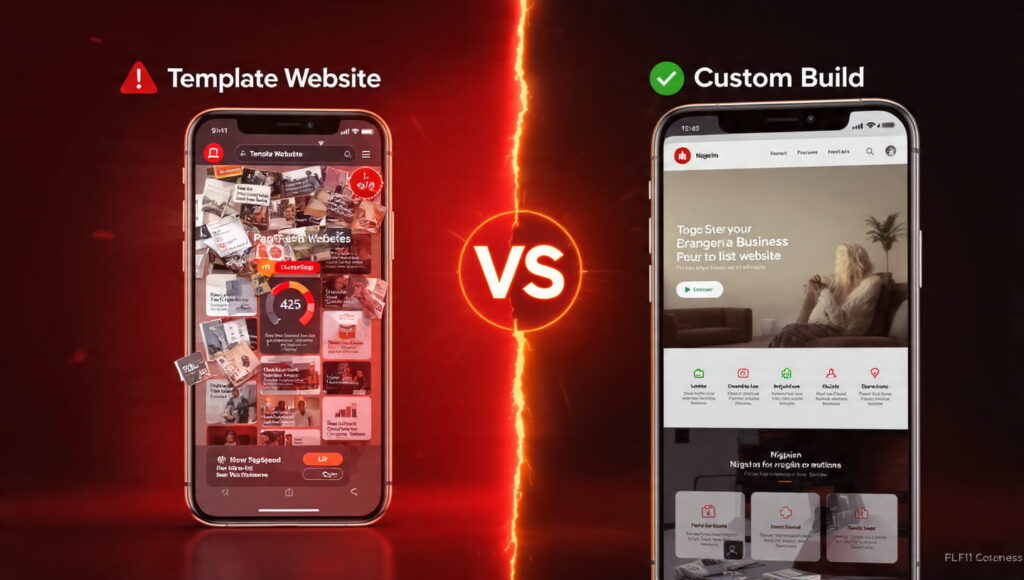
The custom vs template website performance comparison becomes painfully obvious when you run both through Google Page Speed Insights.
A well-built custom site routinely scores in the 85–95 range while a default WordPress theme, untouched? Often scores 30–50.
That gap is not cosmetic, but pure ranking power.
2. SEO Architecture Engineered from Day One
One of the most expensive misconceptions in Nigerian web design is that SEO is something you add to a website after it’s built.
And something most people do is Install Yoast and Boom they’re Done.
Things are not done like that bro!
It absolutely does not work that way, because SEO is structural, it lives in how the site is built, not in a plugin. Proper heading hierarchy, schema markup, clean URL structures, sitemap.xml, robots.txt configuration, and image alt text are not afterthoughts.
They are the foundation Google uses to decide whether to rank you or Ignore YOU.
The custom website benefits for growing brands go beyond aesthetics here. When your site is custom-built for SEO from day one, you don’t inherit a theme’s technical debt.
I mean you don’t get to see legacy plugin conflicts creating duplicate meta tags, canonicalization errors baked into the theme code, and bloated heading structure that confuses Google’s crawlers about what your page is actually about.
You start clean, and rank faster.
Also, businesses in competitive Nigerian niches that invest in SEO-first custom builds through Sizzle Digital’s process begin seeing measurable organic traffic movement within 60–90 days of consistent content publishing. It’s all about building the right foundation.
3. Full Ownership, Conversion Strategy, and Scalable Infrastructure
These three important things such as ownership, conversion-focused and scalable infrastructure matters every single time.
It is necessary to ensure that you have no licensing fees, No theme vendor holding your design decisions hostage and no structural limitations imposed by someone else’s creative brief.
When you own a custom-built website, you own the code, the design, and the roadmap. You can add a booking system next quarter. Integrate a CRM the quarter after and still launch a new product line without worrying whether the theme supports the product variant logic you need.
One of the core elements of a custom web design is that:
Conversion-focused design becomes the layer that custom builds uniquely enable. Your CTAs are placed where Nigerian users actually look, and not where the theme decided to put them.
Your lead capture form is designed around your specific customer journey, and not a generic contact form template. What your homepage does is it tells Google, and your visitors, exactly who you are, what you do, where you operate, and who you serve.
That’s on-page SEO done right, and it’s impossible to achieve all this inside a locked template theme structure.
Thinking about making the switch from template to custom? Sizzle Digital’s Conversion Website Blueprint starts with your revenue goals, and not your color palette. Book a free discovery call and find out exactly what a custom build could do for your business in 2026.
Disadvantages of Using Website Templates
Let’s be fair. Templates have their place, but that place is not “building a serious, revenue-generating Nigerian business website for you.
The limitations of premade website themes become clear the moment you measure them against Nigerian market conditions. Most templates ship with 200–400KB of CSS and JavaScript that has nothing to do with your business.
Every extra kilobyte is a tax on load time paid by your Nigerian customer on mobile data. A site loading in 7–8 seconds on a 3G connection is a site nobody visits twice. And the algorithm knows, and slow sites get buried.
The design lock-in is equally painful and templates prevent the custom conversion architecture that growing Nigerian brands need to stand out. When Astra or Divi decides where your CTA button goes, you lose the ability to engineer the user flow that moves your specific customer from landing to purchase.
And the worst thing is, you can’t outrank competitors by being identical to them. The disadvantages of using website templates aren’t visible on Day 1, instead they compound slowly, over the months when you’re watching your competitor’s Google ranking climb while yours stays flat.
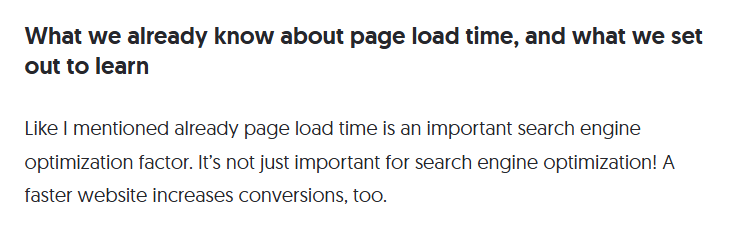
As Neil Patel noted in his 2024 SEO guide:
Cost of Custom Website Design vs Templates in Nigeria
We all know that in Nigeria, when money talks, everything else just fades away. The cost of custom website design vs templates in Nigeria is the question that stops most business owners mid-decision, and it’s the one that gets the most dishonest answers.
The truth is, comparing a ₦35,000 template to a ₦500,000 custom build based purely on Day 1 price is like comparing the cost of buying a generator to the cost of not having one.
The numbers look different when you factor in what happens next.
And that is what we’ll discuss moving forward.

How Much Does a Template Website Cost in Nigeria
Going the DIY route with Wix or Squarespace? That’s ₦15,000–₦80,000 per year just in platform subscriptions, and that’s before you consider the hours you’ll spend dragging blocks around instead of running your business. You also get a design shared with thousands of other businesses globally.
On the other hand, hiring a freelancer to install a WordPress theme typically runs ₦50,000–₦150,000. What you receive is a logo-dropped-in, and content-pasted setup.
The budget difference between custom and theme websites looks massive at this stage.
Template wins almost immediately, no argument, but then come the plugin license renewals (₦10,000–₦40,000/year), the emergency fix fees when the contact form breaks after a WordPress update (₦30,000–₦80,000 each time), and the hosting migration costs when the server proves too slow for your traffic.
These costs don’t announce themselves upfront. They accumulate quietly, until you’re staring at a total spend that looks nothing like the ₦50,000 you thought you paid.
Nigeria Web Design Pricing Comparison
Here’s a realistic 18-month scenario for two Nigerian businesses making different choices.
Business A: spends ₦80,000 on a WordPress theme + freelancer setup. Over 18 months: ₦40,000 in plugin renewals, ₦65,000 in emergency fixes (two separate incidents), ₦120,000 lost in estimated revenue from slow load and poor SEO, and finally, ₦450,000 to rebuild properly when they realize the site can never rank.
Total: approximately ₦755,000.
Business B: spends ₦500,000 on a Sizzle Digital custom build from day one. SEO-ready, fast, built for growth. After 18 months of content publishing, it’s generating consistent Google traffic and qualifying leads monthly.
Total: ₦500,000 and a functioning revenue asset.
Sizzle Digital’s client experience confirms this pattern repeatedly. Businesses that started on cheap templates often paid ₦700,000+ total before they arrived at the custom build they should have commissioned from the beginning.
A ₦500,000 Sizzle Digital website that ranks on Google page one and converts at 4% is not a web design cost, but a revenue infrastructure.
The Nigeria web design pricing comparison only makes sense when you measure it the same way you’d measure any other business investment not by the invoice, but by what comes back.
Best Website Solution for Nigerian Small Businesses: How to Make the Final Call
Enough analysis, it’s time for making the right decision.
If you’ve read this far, you’re serious about making the right call, and you deserve a straight answer, not another “well, it really depends…” non-answer that sends you back to Google.
So here it is.
Best Web Design Option for Nigerian Entrepreneurs
Choose a Template If…
- You’re pre-revenue. A professional website solution for local Nigerian brands doesn’t always start at ₦500,000. If you’re still testing whether your idea has a market, a clean, functional template is an entirely reasonable placeholder. Don’t over-invest before you validate.
- Google ranking isn’t in your plan yet. If your customer acquisition strategy is purely referral-based or social media-driven right now, and you just need a credible link to share in your Instagram bio, a template serves that purpose.
- It’s a short-term campaign. Event landing pages, one-time promotional pages, or temporary microsites don’t justify custom builds. Use a template, run the campaign, move on.
Choose a Custom Website If…
- Your website is your business. If leads, bookings, or e-commerce sales happen through your website, it is business infrastructure, not a marketing expense. Cutting corners here is cutting corners on your revenue pipeline.
- You’re post-revenue or funded. The website development choice for Nigerian startups becomes obvious once you have revenue to protect. Don’t risk it on a template that can’t scale with you.
- SEO is part of your acquisition strategy. If organic Google traffic matters to your business, a template will eventually become a problem from launch day. It compounds, the gap between you and a custom-built competitor widens every month you’re on a theme.
- Premium pricing requires premium perception. If you charge more than your competitors, your website must reflect that differentiation. You cannot command premium pricing with a design your customers recognize from five other websites they visited this week.
Ready to Compete? Let’s Build a Website That Delivers Results For you
In 2026, the custom website design vs website templates in Nigeria debate doesn’t really have two equal sides anymore. Templates had their golden era.
For serious Nigerian businesses competing for Google rankings, managing e-commerce, building brand authority, and turning digital traffic into naira, custom is no longer a luxury, but the baseline.
The businesses winning online right now in Nigeria are the ones ranking on page one, the ones converting Instagram followers into paying customers, the ones generating ₦3–5 million in monthly leads from their websites which they didn’t get there by finding the cheapest option.
They got there by investing in the right foundation and treated their website the way you treat a key member of staff.
If you’ve already paid for a template that didn’t deliver, or if you’re still making your web decision then this is the moment to change that narrative. Don’t pay for the same mistake twice.
Let Sizzle Digital build a growth machine, conversion-focused, & SEO-engineered Custom website that stands the test of time for you.
FAQs
A template website is built on a pre-designed framework where you fit your business content into an existing structure while a custom website is built from scratch around your specific business goals, brand identity, and conversion requirements. In the Nigerian context, the difference extends beyond appearance. Custom websites are built with your target audience’s browsing habits in mind, specifically, Nigeria’s mobile-first, bandwidth-limited user base. Custom builds carry lean, purposeful code, while templates ship with bloated libraries that slow loading times. For businesses that depend on Google organic traffic or e-commerce, a custom website provides the SEO architecture, Paystack integration quality, and conversion-focused design that templates structurally cannot deliver at the same level.
For businesses that are post-revenue, competing for Google rankings, or using their website as a primary lead generation or sales tool yes, absolutely. The key question isn’t whether the upfront cost is high, but what the total cost of ownership looks like over 12–18 months. Businesses that start with a cheap template often spend more money in patch costs, emergency fixes, and eventual rebuilds than they would have spent on a custom build at the beginning. Sizzle Digital’s client experience consistently shows that businesses investing in a proper custom build from day one sees better SEO results, higher conversion rates, and lower total web expenditure over the first 18 months of operation.
Custom website pricing in Nigeria varies significantly based on scope. A brochure or portfolio site (5–7 pages, SEO-ready, mobile-optimized) typically runs ₦200,000–₦500,000. An SME business site with lead capture, blog, and CRM integration runs ₦350,000–₦800,000. E-commerce custom builds with Paystack or Flutterwave integration, product management, and conversion-optimized checkout flow range from ₦700,000–₦2,000,000+. These figures reflect what you get: strategy, performance architecture, SEO foundation, and full admin ownership at handover and not just a design. For a transparent quote based on your specific business needs, Sizzle Digital provides a free discovery consultation.
DIY template platforms like Wix and Squarespace run approximately ₦15,000–₦80,000 per year in subscription fees, depending on the plan. A WordPress theme purchased and installed by a freelancer typically costs ₦50,000–₦150,000 upfront. These figures seem lower until you factor in ongoing costs: premium plugin licenses (₦10,000–₦40,000/year), emergency fix fees when things break (₦30,000–₦80,000 per incident), and the revenue lost during downtime and from poor SEO performance. The true 18-month cost of a template website, including all downstream expenses, often exceeds ₦400,000–₦700,000; comparable to or exceeding what a properly built custom site would have cost from the start.
Yes, but with significant structural limitations. Template websites can rank for low-competition, long-tail keywords when they have strong content and basic SEO setup. However, they face inherent disadvantages: bloated code that reduces PageSpeed scores (a direct ranking factor), shared CSS and JS libraries that drag performance, and limited control over technical SEO elements like schema markup, URL structure, and heading hierarchy. For businesses in competitive Nigerian niches such as Lagos real estate, fintech, legal services, & e-commerce, a template’s SEO ceiling will become evident within 6–12 months as custom-built which will make competitors outperform them on every technical ranking signal.
For pre-revenue businesses or MVP validation: Wix or a basic WordPress theme is a reasonable, low-risk starting point. For post-revenue businesses competing for Google traffic or running e-commerce: a custom-built WordPress or headless CMS site is the appropriate infrastructure. WordPress remains the most widely supported platform in Nigeria’s web development ecosystem, offering the widest range of developer talent, plugin support, and flexibility. However, the platform choice matters less than the quality of the build. A well-built custom WordPress site massively outperforms a template-installed WordPress site in every performance and SEO metric that affects business outcomes.
Timeline depends on scope. A custom brochure site (5–7 pages) typically takes 3–6 weeks from kickoff to launch with a professional agency. An SME business site with blog, lead capture, and integrations takes 6–10 weeks. E-commerce builds with full Paystack integration, product management, and testing typically run 8–14 weeks. These timelines assume timely content delivery from the client. Delays in providing copy, images, or approval feedback are the most common cause of extended timelines. Sizzle Digital’s process includes a structured project timeline with milestones, ensuring both parties stay accountable from strategy through to launch.
If your Wix site is currently generating meaningful Google organic traffic and converting visitors into leads or sales, there may not be urgency to rebuild. However, if your Wix site has been live for more than 6 months and still isn’t appearing in Google for your target keywords, or if your conversion rate is below 2%, or if your Page Speed score on mobile is below 60 then those are clear signals that the platform is a structural ceiling on your growth. The migration from Wix to a custom-built site does come with considerations, including domain transfer, content migration, and an SEO transition period.
Template website failures are more common than most Nigerian business owners expect. Common failure points include: WordPress core or plugin updates that conflict with the theme, SSL certificate expiration that takes the site offline, contact form breakages, and mobile layout collapses after platform changes. When your template breaks, the developer who built it is often unavailable, meaning you hire a second developer to diagnose and fix work they didn’t build, typically costing ₦30,000–₦80,000 per incident. Custom-built sites are not immune to technical issues, but they’re built to a higher structural standard and typically come with documented code that any competent developer can maintain.
Ask yourself these four questions: (1) Is my website my primary tool for generating leads, bookings, or sales? (2) Do I want to rank on Google for keywords my customers are actively searching? (3) Does my brand need to command premium pricing and be differentiated from competitors? (4) Am I planning to scale my business and add functionality over the next 2–3 years? If you answered yes to any two of these questions, then a custom website is the appropriate infrastructure for your business stage. If all four are yes, a template is actively costing you revenue every month you stay on it.
Yes! Paystack and Flutterwave integration is a core competency of Sizzle Digital’s custom build process. Clean, tested payment gateway integration is a non-negotiable component of any Nigerian e-commerce or service-booking website. Sizzle Digital’s integrations are built to handle edge cases: failed payment retries, webhook configuration for order confirmation, refund flow management, and mobile checkout optimization. This is categorically different from installing a generic WooCommerce Paystack plugin on a template site, the latter is fragile and frequently breaks after plugin updates. A properly integrated checkout flow is a direct revenue protection measure, not just a feature checkbox.
The Conversion Website Blueprint is Sizzle Digital’s strategic framework for custom website projects. Every build begins with a structured discovery phase: business goal mapping, customer journey analysis, competitor research, and keyword strategy. These inputs shape every design decision, from homepage layout to CTA placement to URL structure. The Blueprint ensures that the finished website isn’t just aesthetically professional but is engineered to rank on Google, load fast on Nigerian mobile networks, and convert visitors into qualified leads or paying customers. It’s the difference between a website that looks good and a website that performs, and it’s available to SMEs, not just large corporates.
The first step is a free discovery consultation at Sizzle Digital. In this session, Sizzle Digital’s team will assess your current digital presence, understand your business goals, and provide a clear recommendation on the scope and investment required for your project. There’s no obligation and no pressure, the goal is to make sure both parties are aligned before any work begins. Clients receive a written scope of work, project timeline, and transparent pricing before any payment is made. Full admin access to domain, hosting, and CMS is confirmed in writing at project kickoff.