Table of contents
- The Reasons for Website Failures in Nigeria
- How Websites Lose Customers in Nigeria: The Post-Launch Problems Nobody Tells You About
- Reasons For Failed Business Pages in Nigeria: The Technical Foundation Problems That Quietly Kill Sites
- Slow Website Issues in Nigeria: How Page Speed Is Silently Destroying Your Business
- Low Page Speed Networks in Nigerian: Mobile-First Fixes That Matter Most
- No Local SEO in Nigeria: Why Google Cannot Find Your Business and How to Fix It
- Missing CTAs in Nigeria Websites: The Common Mistakes Killing Your Conversions
- Three Ways to Add Trust to Your Website in Nigeria
- Final Thoughts
- Similar Blog Post You Might be Interested In
- FAQs
Your Nigerian business website might be costing you customers. We’ve diagnosed hundreds of local sites and fixed the exact failures covered here. Request your free audit today and discover within 48 hours what’s broken and what it’s costing you.
I have sat with business owners in Lekki, Wuse, and GRA who showed me their websites with quiet pride, ‘We just launched this o, cost us ₦800,000’ and the site had no visible call to action, loaded in 9 seconds on mobile, and had no Google Analytics installed.
Nigerian website failures are not accidents. They are patterns that are expensive.
According to a 2024 report by BudgIT and digital research firm NITDA, less than 12% of Nigerian SME websites pass Google’s Core Web Vitals thresholds, meaning over 88% of Nigerian business sites are penalized in search rankings before a single visitor even arrives.
That statistic should make every Nigerian business owner uncomfortable. It should certainly make you look twice at your own site.
This article diagnoses all the root causes of Nigerian website failures, slow speeds, missing SEO, absent CTAs, broken trust, no strategy and gives you the exact fixes for each one. No vague advice. No global best practices that do not work on MTN 4G. Real, specific, actionable solutions built for Nigerian business realities.
Whether your site is brand new or three years old, sitting idle or getting traffic it refuses to convert, the failures ahead explain why. And for every failure, there is a fix.
Let’s diagnose your site, starting with the root of it all.

The Reasons for Website Failures in Nigeria
Thousands of Nigerian businesses spend money on a website and then watch it sit silently, no traffic, no inquiries, no customers. Nigerian website failures are not random. They follow a predictable pattern of five specific mistakes that repeat across Lagos, Kano, Enugu, Abuja, Port Harcourt, and every other city in the country.
The uncomfortable truth is that most Nigerian websites were never designed to succeed but designed to exist. There is a significant difference. A website that exists looks like it should work.
A website designed to succeed is engineered from the ground up, strategy first, design second, SEO third, with a single commercial purpose: converting strangers into paying customers.
Before we get into the specific fixes in the sections ahead, we need to understand the three moments where Nigerian website failures are born: before the site launches, in the weeks after launch, and in the technical foundation most Nigerian developers quietly skip.
Web Mistakes Nigerian Companies Make Before the Site Even Launches
- Building without a strategy: Most Nigerian website failures begin before a single page is designed. A site built without defining the target audience, the primary conversion action, and the traffic source is a digital brochure masquerading as a marketing tool. It looks like a website but functions like a billboard in the bush, visible to no one, selling to nobody.
- Choosing a developer on price alone: The cheapest website quote in Lagos or Abuja almost always means a slow, unoptimized site on shared hosting with no SEO foundation, no mobile testing, and no conversion architecture. The ₦50,000 website that costs ₦500,000 in lost leads every year is Nigeria’s most common, and most painful, digital investment mistake.
- Copying a competitor’s design without understanding its strategy: A beautiful website with no CTA structure, no local SEO, and no trust signals is still a failure, regardless of how it looks. Form follows function, and the function of a Nigerian business website is to generate inquiries. If your site cannot do that, the design is irrelevant.
How Websites Lose Customers in Nigeria: The Post-Launch Problems Nobody Tells You About
The launch date is not the finish line. For most Nigerian businesses, it is the moment their website problems quietly begin. Three post-launch mistakes account for a significant percentage of sites losing customers in Lagos and beyond, and none of them are technical. They are operational failures.
- No analytics tracking installed: A Nigerian business website with no Google Analytics or Google Search Console is flying completely blind. You cannot fix what you cannot measure. Set up both tools on launch day so you know exactly where visitors arrive from, what they do, and critically where they leave without converting.
- No content updates after launch: Google treats websites that have not been updated in 6–12 months as low-priority signals. A static site with no new blog posts, no service page updates, and no fresh content is actively losing search ranking to competitors who publish consistently. Consistency beats perfection every time in Nigerian SEO.
- Zero active promotion strategy: A website that relies entirely on word-of-mouth to get discovered will receive zero traffic from Google, zero traffic from social media, and zero from search, because none of those channels were configured to feed it. A website without a traffic strategy is a shop in an empty building. Impressive interior, zero footfall.
Reasons For Failed Business Pages in Nigeria: The Technical Foundation Problems That Quietly Kill Sites
Every Nigerian business website, regardless of how clean the design looks, sits on a technical foundation. If that foundation has cracks, the whole structure underperforms, quietly, invisibly, and expensively. These three technical failures are among the most common reasons for failed business pages in Abuja, Lagos, and Port Harcourt.
- No SSL certificate: Nigerian visitors who see the ‘Not Secure’ warning in their browser address bar leave immediately and they are right to. Google also penalizes non-HTTPS sites in search rankings. An SSL certificate costs less than ₦5,000 per year and is the absolute minimum security baseline for any Nigerian business website with commercial intent.
- Broken links and 404 errors: Every broken link sends a negative trust signal to visitors and a crawl error to Google. Run a free audit using Google Search Console at least quarterly to identify and fix broken URLs before they compound into ranking damage. A single broken page is embarrassing; a pattern of broken pages signals an abandoned site.
- No sitemap submitted to Google: If Google’s crawler cannot efficiently index every page on your site, those pages do not exist in search results. Submitting an XML sitemap through Google Search Console is a 10-minute task that ensures every service page, blog post, and landing page has a fair chance to rank. Skip it and you are ranking with one hand tied behind your back.
| Failure Category | Where It Originates | Business Impact | Fixable Without Rebuild? |
| No strategy at build | Pre-launch decision | Zero lead generation | Partial requires restructure |
| No analytics setup | Post-launch neglect | Cannot optimize or improve | Yes 30 minutes |
| No content updates | Ongoing neglect | Declining search rankings | Yes content calendar |
| No SSL certificate | Technical oversight | Visitor trust loss + SEO penalty | Yes under ₦5,000/yr |
| No sitemap submitted | Technical oversight | Pages unindexed by Google | Yes 10 minutes |
| No active promotion | Strategic gap | Zero organic or social traffic | Yes requires strategy |
Slow Website Issues in Nigeria: How Page Speed Is Silently Destroying Your Business
Speed is not a technical nicety in Nigeria, it is a commercial necessity. Nigerian mobile users on MTN, Airtel, Glo, and 9mobile connections have near-zero tolerance for slow sites.
If your page takes longer than 3 seconds to load, the majority of your potential customers have already left for a competitor whose site loaded faster. They did not even read your headline.
The numbers back this up hard: Google’s own data shows that 53% of mobile users abandon a page that takes more than 3 seconds to load. In Nigeria, where many users are on 3G networks or variable 4G with inconsistent signal, that abandonment threshold drops further.
Slow website in Nigeria issues is not just annoying, they are a direct, measurable revenue leak that compounds every single day.
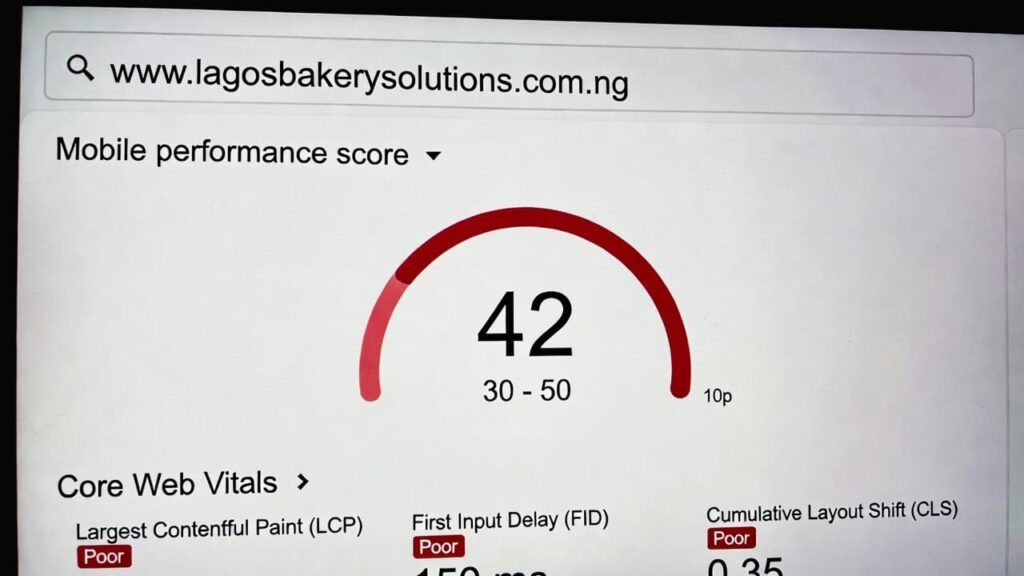
Diagnose Your Slow Website Nigeria Issues With These Free Tools
- Google PageSpeed Insights: Enter your Nigerian business website URL and receive an instant performance score from 0–100 for both mobile and desktop. Any mobile score below 70 means you have a critical speed problem actively costing you customers. Run this test today right now, before reading further.
- GTmetrix (gtmetrix.com): Run your speed test from a Lagos or African server node to simulate the actual experience of a real Nigerian visitor on local infrastructure. Testing from a US or European server gives you a deceptively fast result, the African node shows you the truth.
- Google Search Console Core Web Vitals report: This free dashboard shows whether your pages pass Google’s LCP (Largest Contentful Paint), FID (First Input Delay), and CLS (Cumulative Layout Shift) thresholds, the three specific metrics Google uses to evaluate page experience and factor directly into your Nigerian search rankings.
The 5 Speed Fixes With the Biggest Impact for Nigerian Sites
Not all speed fixes are equal. These five changes, applied in order, produce the largest improvement in load time for the smallest investment of time and money. If your Nigerian website scores below 70 on Page Speed mobile, work through this list before paying for anything else.
- Compress and convert all images to WebP format: Images are the single biggest cause of slow Nigerian website load times. An uncompressed hero image can be 3–5MB. The same image in WebP format shrinks to 200–400KB an 80–90% file size reduction that can cut your total load time by 2–3 full seconds on a Nigerian mobile connection. Tools like Squoosh.app convert images for free in seconds.
- Move to faster, geographically closer hosting: Most failed Nigerian websites sit on shared US or UK hosting plans, adding 300–600ms of latency before a single byte reaches a Nigerian visitor’s phone. Upgrading to hosting with African or Middle Eastern server infrastructure or adding a CDN like Cloudflare cuts this baseline delay dramatically.
- Install a caching plugin on your WordPress site: LiteSpeed Cache, WP Rocket, or W3 Total Cache store pre-built versions of your pages so the server does not regenerate them from scratch on every visit. This single fix can reduce server response times from 800ms to under 200ms. It costs nothing to implement with free plugin versions.
- Minify CSS, JavaScript, and HTML files: Your website code contains whitespace, comments, and redundant characters that add file size without adding function. Minification tools compress this code automatically most quality caching plugins handle minification as part of their standard setup. Enable it and move on.
- Remove unused plugins and scripts from WordPress: Every inactive plugin on a WordPress site adds HTTP requests that slow load time. Audit your plugins quarterly. Remove anything not actively contributing to performance or conversion. Sites with 20+ plugins and a PageSpeed score below 50 are almost always suffering from plugin bloat a fully solvable problem.
Low Page Speed Networks in Nigerian: Mobile-First Fixes That Matter Most
Google’s mobile-first indexing means your mobile page speed score is the score that determines how high you rank in Nigerian Google searches. Not your desktop score. Mobile.
A slow mobile site is simultaneously invisible in search results and unusable for the 80%-plus of Nigerian visitors browsing on Android phones. You are losing on both fronts at once.
Enable lazy loading for all images below the fold. Lazy loading means images load only when a visitor scrolls to them, rather than all at once when the page first opens.
This dramatically improves perceived load time, the visitor sees your headline and CTA immediately while the rest of the page loads in the background. It is a free performance gain available in WordPress without any coding.
If your Nigerian hosting provider offers a built-in CDN or image optimization service, activate it immediately. A CDN stores copies of your static assets images, CSS, JavaScript on servers physically closer to Nigerian visitors, reducing the distance data travels and cutting load times in the process.
Cloudflare’s free tier alone has improved load times by 40–60% for Nigerian sites we have optimized at Sizzle Digital.
| Speed Fix | Effort Level | Cost (₦) | Expected Load Time Improvement |
| Convert images to WebP | Low: 1–2 hours | Free | 2–3 seconds faster on mobile |
| Install caching plugin | Low: 30 minutes | Free | Server response 800ms → 200ms |
| Enable Cloudflare CDN (free) | Low: 1 hour | Free | 40–60% load time reduction |
| Minify CSS/JS/HTML | Low: via plugin | Free | 100–300ms improvement |
| Enable lazy loading | Low: 15 minutes | Free | Instant perceived load boost |
| Upgrade to faster hosting | Medium: migration | ₦30,000–₦150,000/yr | 300–600ms latency eliminated |
| Remove unused plugins | Low: 30 minutes | Free | 100–500ms per removed plugin |
No Local SEO in Nigeria: Why Google Cannot Find Your Business and How to Fix It
No local SEO in Nigeria is the most expensive invisible problem a Nigerian business can have. Right now, a potential customer in Lagos is searching ‘digital marketing agency Lagos’ or ‘web designer near me Abuja’ and your business is not appearing. Your competitor is.
That search just cost you a client. And it is happening dozens of times a day on every Nigerian business site without a local SEO strategy.
The frustrating part is that local SEO for Nigerian businesses is not complex or expensive. It is mostly a matter of doing the specific things Google asks for and most Nigerian websites have simply never done them. Three fixes cover 80% of the local SEO gap for the average Nigerian business website.
Fix 1: Set Up and Optimize Your Google Business Profile
Google Business Profile is the single most important free local SEO tool available to any Nigerian business. A fully optimized profile places your business in Google Maps, the local search pack the map results that appear above organic listings and Google’s Knowledge Panel. These are the most visible positions in Nigerian local search, and most of your competitors have either not claimed them or set them up poorly.
Google Business Profile setup checklist for Nigerian businesses: exact business name matching your website, specific primary category (‘Web Design Agency’ not just ‘Agency’), service area listing your specific cities, phone number with country code, website URL, accurate business hours, and a minimum of five professional photos of your office, team, or completed work. Incomplete profiles rank lower, fill every field.
Post to your Google Business Profile at least twice per month. Share case studies, service updates, client results, or industry tips. Google rewards active profiles with higher local rankings, and Nigerian buyers who see a recently updated profile trust the business more than one that has not posted since 2022. Fifteen minutes of monthly activity can meaningfully move your local search position.
Fix 2: Build Dedicated Location Pages for Every Nigerian City You Serve
If your Nigerian business serves multiple cities Lagos, Abuja, Port Harcourt, Kano, Ibadan you need a separate service page for each one. A page titled ‘Web Design Services in Abuja’ targeting the keyword ‘web design Abuja’ will rank for Abuja searches.
Your homepage targeting Nigeria broadly will not. This is one of the most consistently underdone elements of Nigerian website SEO, and fixing it can unlock significant ranking gains within 60–90 days.
City page structure that ranks in Nigerian local search: H1 with city and service → opening paragraph with city name, local business context, and target keyword → three reasons why local businesses in that city choose you → a local case study or testimonial from a business in that city → contact form or WhatsApp CTA with a locally relevant phone number. Each element is there for a reason. Do not cut corners.
Local directories matter too. Submit your Nigerian business to Nairaland business listings, VConnect Nigeria, Foursquare Nigeria, and Yellow Pages Nigeria. Each listing creates a citation, a consistent mention of your business name, address, and phone number that collectively strengthens your local SEO authority. Inconsistent or incomplete citations are a common hidden drag on Nigerian local rankings.
Fix 3: Tell Google Exactly What Your Business Is
Schema markup is invisible structured code added to your website that tells Google’s crawler specific facts about your business: your name, address, phone number, business type, operating hours, and review ratings.
Without it, Google makes educated guesses about what your business does and where it operates. Google ranks confident, structured signals over ambiguous ones every time.
The most valuable schema types for Nigerian businesses are LocalBusiness schema (name, address, phone, geo-coordinates), Service schema (each service with description and price range), and Review schema (aggregate star rating from real testimonials).
Sizzle Digital implements all three as standard on every Nigerian website build because these technical signals are often the difference between ranking on page one and being invisible.
After adding schema markup, test it free using Google’s Rich Results Test at search.google.com/test/rich-results, paste your page URL and confirm Google can read your structured data correctly. Fix any flagged errors within 48 hours of discovery to avoid indexing delays. This 10-minute check after every site update protects your rankings from silent technical drift.
| Local SEO Fix | Time to Implement | Cost | Expected Ranking Timeline |
| Google Business Profile setup | 2–3 hours | Free | 2–4 weeks for map pack visibility |
| Google Business Profile posting (2x/month) | 30 min/month | Free | Ongoing ranking improvement |
| City-specific service pages | 3–5 hours per city | Free (developer time) | 4–8 weeks per page |
| Local directory citations | 2–4 hours total | Free–₦5,000 | 4–12 weeks for authority build |
| Schema markup implementation | 2–4 hours | Free (technical) | 2–4 weeks for rich result eligibility |
| Google Search Console setup | 30 minutes | Free | Immediate indexing improvement |
If your Nigerian business website has any of these failures, the fix starts here. Sizzle Digital offers a free audit checking speed, local SEO, CTAs, trust signals, and technical health. Request yours today before your competitors fix theirs first.
Missing CTAs in Nigeria Websites: The Common Mistakes Killing Your Conversions
A Nigerian business website without clear, prominent calls to action is like a shop with no counter, no staff, and no sign telling customers where to pay. Visitors arrive, look around, find nothing directing them to act and leave.
Missing CTAs Nigeria sites are one of the most common and most fixable causes of zero-inquiry websites in the country. And the frustrating part? Every missed lead was one click away from becoming a customer.
The CTA problem on Nigerian websites shows up in three distinct forms: CTAs that are hidden, CTAs that do not exist at all, and CTAs that use copy so weak they might as well be invisible. Each version has a specific fix and implementing all three typically doubles or triples monthly inquiry rates without a single design change to the rest of the site.
1. Hidden Contact Kills Local Leads: Where Most Nigerian Sites Bury Their CTAs
The most common CTA crime on Nigerian business websites: the only contact option is a ‘Contact Us’ link buried in the navigation menu, or at the very bottom of the footer. A visitor who is interested but not yet committed will not hunt for your contact page.
They will leave. And they will not come back. Your CTA must be impossible to miss at every stage of the page especially before the first scroll.
Do this audit right now. Open your business homepage on a mobile phone. Take a screenshot without scrolling. If you cannot see a CTA button in that screenshot, not a navigation link, a button you are losing leads on every single mobile visit. That is the 80%-plus of your Nigerian visitors who browse on phones.
The above-the-fold section on mobile is your most valuable commercial real estate. Treat it accordingly.
‘Call Now’ and ‘WhatsApp Us’ outperform ‘Contact Us’ by 30–50% in Nigerian conversion testing because they describe an immediate, specific action rather than a vague destination. Nigerian buyers prefer instant communication. They will not email and wait two days. They want to message now, get a reply now, and make a decision now. Meet them where they are and be explicit about how to reach you.
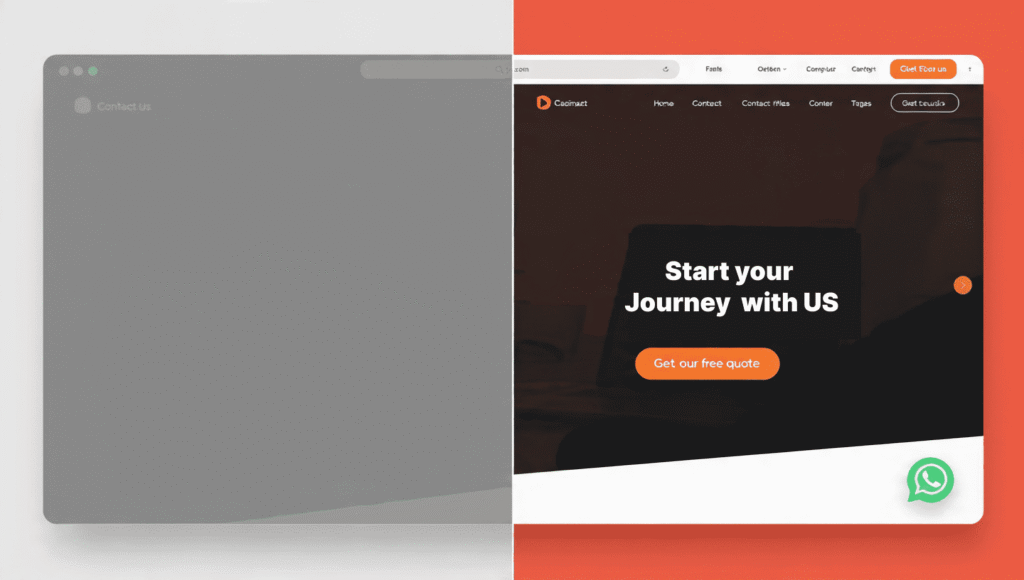
2. WhatsApp Button Website Conversions: The Most Powerful CTA You Are Probably Not Using
WhatsApp is Nigeria’s primary business communication channel. More Nigerian business conversations begin on WhatsApp than on email, phone, or contact forms combined. A website without a floating WhatsApp button is actively refusing the communication method your customers prefer most.
It is the equivalent of refusing to pick up the phone in 2015 technically a choice, commercially a disaster.
Configuration matters as much as placement. Set your WhatsApp click-to-chat link with a pre-written opening message so the visitor does not have to think about what to say: ‘Hi, I visited your website and I’m interested in your services. Can we talk?’ Remove every possible step between interest and contact. The fewer decisions a visitor has to make, the higher the chance they complete the action.
Track every WhatsApp button click as a conversion event in Google Tag Manager and Google Analytics 4. This data tells you exactly how many leads your WhatsApp button generates versus your contact form and it gives Sizzle Digital the real numbers needed to optimize your site’s CTA strategy based on actual Nigerian visitor behavior, not assumptions.
3. The CTA Copy That Converts Versus the Copy That Gets Ignored
Weak CTA copy that Nigerian visitors ignore: ‘Submit,’ ‘Click Here,’ ‘Contact Us,’ ‘Send Message.’ These labels communicate no value and create no urgency, they are filler text that reads as ‘do some admin work.’ Nobody wakes up in the morning wanting to ‘submit’ anything. Weak verbs on CTA buttons are a silent conversion killer.
Strong CTA copy that Nigerian visitors act on: ‘Get My Free Website Audit,’ ‘Request a Custom Quote,’ ‘Book a Free 30-Minute Strategy Call,’ ‘WhatsApp Us Now, We Reply in Minutes.’ Each of these describes a specific, valuable outcome the visitor receives by clicking, and sets a clear expectation of what happens next. Specificity drives action. Vagueness drives inaction.
The CTA placement formula for Nigerian business websites: primary CTA in the hero section (above the fold on mobile), secondary CTA at the end of the services section, tertiary CTA at the end of the About/Team section, floating WhatsApp button visible on every page, and a final CTA above the footer. Five touchpoints minimum. Nigerian buyers typically need multiple prompts before they commit, make sure the prompt is always within reach.
| CTA Type | Placement | Nigerian Conversion Context | Estimated Conversion Rate |
| Floating WhatsApp button | Every page, bottom-right | Nigeria’s #1 business channel | Highest 50–80% of total inquiries |
| ‘Get a Free Quote’ hero button | Above fold, homepage | Immediate, low-commitment offer | High 3–8% visitor to click |
| ‘Book a Free Call’ in services | End of services section | Mid-funnel buyer consideration | Medium 2–5% visitor to click |
| Exit-intent popup with offer | On abandonment trigger | Last-chance recovery tactic | Recovers 10–15% of exits |
| ‘Send Message’ contact form | Contact page | High-intent finalisation | Low volume, high intent |
| ‘Contact Us’ navigation link | Header/footer only | Vague, passive, no urgency | Very low below 1% |
Three Ways to Add Trust to Your Website in Nigeria
Nigerian buyers are sharp. They have been burned before, by businesses that looked polished online and delivered nothing offline. A website with no trust signals activates that skepticism the moment a visitor arrives.
No trust Nigerian websites do not just fail to convert, they actively repel the very customers they need most. In a market where digital fraud is a lived experience for millions, trust is not a nice-to-have. It is the product.
The good news: trust signals are not expensive to implement. They are mostly a matter of knowing what Nigerian buyers look for and making sure those signals are visible, specific, and credible. Three pillars cover the full trust-building architecture of a high-performing Nigerian business website.
1. Add Testimonials to Boost Sales in Naija: The Proof Format That Removes Every Objection
The most trusted testimonial format for Nigerian websites combines four elements: a real photograph of the client (their actual face, not a logo or silhouette), their full name, the name and city of their business, and a specific result statement with numbers.
‘Sizzle Digital rebuilt our Lagos fintech site and our inquiry rate went from 3 to 22 per month in 8 weeks’ is worth more than ten vague five-star praises. Specificity is the trust mechanism; vague claims are discounted, specific numbers are believed.
Video testimonials from Nigerian clients are the highest-converting trust signal a local business website can display. A 60–90 second clip of a real Nigerian business owner describing a specific outcome creates an empathy connection that written text cannot replicate.
It answers the unspoken objection ‘is this business actually trustworthy and will they deliver?’ before the visitor has to ask. If you have satisfied clients and you are not capturing their stories on camera, you are leaving your most powerful proof asset completely unused.
Reviews and case studies conversions strategy: place your strongest testimonial directly beside your primary CTA button on every page where a conversion action exists. The moment of decision is the highest-anxiety point in the visitor’s journey.
A powerful, specific testimonial at that exact location reduces hesitation and increases form submission rates by 25–40%. Do not save your best proof for the About page, deploy it at the conversion point.
2. CAC Address Proof Builds Local Trust: The Verification Signals That Legitimize Your Business
Display your CAC (Corporate Affairs Commission) registration number prominently on your Nigerian business website in the footer, on your About page, or near your contact form. This single detail communicates that your business is legally registered and accountable.
In a market where unregistered operations are common and distrust is widespread, a visible CAC number is a powerful differentiator that costs nothing to display and builds significant credibility.
A physical address, even a shared office or co-working space in Lagos or Abuja, adds substantial credibility to a Nigerian business website. Embed a Google Maps widget showing your location.
Visitors who can see your office on a map trust the business far more than one that lists only a mobile number and Gmail address. Physical presence, even modest physical presence, signals accountability in a way that a phone number simply cannot.
A visible live chat widget Tawk.to is free and widely used in Nigeria signals that a real person is available behind the website. A site that feels staffed and responsive converts at significantly higher rates than a static page that asks visitors to wait for an email reply.
Responsiveness communicates reliability. In Nigeria’s competitive service market, the business that replies first almost always wins the client.
3. Social Proof Contact Pages: Build the Trust Layer That Closes the Final Conversion Gap
Most Nigerian business websites have a bare contact page with nothing but a form. This is a significant missed conversion opportunity.
The highest-performing contact pages include a reassurance headline (‘We respond within 24 hours, usually faster’), a testimonial from a recent client placed above the form, a short ‘what happens next’ process summary so visitors know exactly what to expect, and a visible phone number plus WhatsApp link before the form. Every one of these elements reduces the anxiety a visitor feels before submitting personal contact details.
If your Nigerian business has been featured in any media Techpoint, Nairametrics, BusinessDay, Guardian Nigeria, or any local publication add a ‘As featured in’ logo strip to your homepage and contact page.
Media logos function as third-party endorsements that instantly elevate perceived credibility. They signal external validation in a way that your own marketing copy, however good, cannot replicate.
Case studies conversion Nigeria implementation: publish at least two detailed case studies on your website. Each should feature a Nigerian client, a specific challenge they faced, the solution delivered, and a measurable result.
Link these case studies from your homepage, services pages, and contact page. Sizzle Digital includes case study structure and placement as a standard component of every website build because proof, properly deployed, is the closest thing to a guaranteed conversion improvement any Nigerian business can make.
| Trust Signal | Where to Place It | Nigerian Context | Conversion Impact |
| Video testimonial (Nigerian client) | Homepage hero, services page | Highest-trust format available | Very High removes all key objections |
| Written testimonial (photo + name + result) | Next to every CTA button | Specific outcomes beat generic praise | High 25–40% form rate increase |
| CAC registration number | Footer and About page | Legal credibility in fraud-aware market | High builds fundamental legitimacy |
| Google Maps embed (physical address) | Contact page, footer | Physical presence = accountability | Medium-High filters serious buyers |
| Media logo strip (Techpoint, Nairametrics) | Homepage and contact page | Third-party validation signal | Medium elevates authority instantly |
| Case study cards (result + timeframe) | Service pages, contact page | Specific proof reduces purchase risk | High shortens decision timeline |
| Live chat / WhatsApp widget | Every page | Responsiveness = reliability in Nigeria | High first responder wins the client |
You’ve spotted the failures, now discover which one is quietly bleeding your profits dry. Get a free, no-obligation website audit today, plus a clear, honest roadmap showing exactly how to fix it
Final Thoughts
Every failure covered in this article has something in common: they are all invisible to the business owner until they are pointed out. That is what makes them so costly. A slow mobile site does not announce itself. Missing schema markup does not send you an alert.
A buried CTA does not tell you it is hiding. These problems simply exist, quietly, bleeding your business of customers it never knew it was losing.
The diagnostic is the hardest part. Once you know the five root causes: no strategy at build, slow page speed, absent local SEO, missing CTAs, and weak trust signals every fix is either free or inexpensive. Most of them can be implemented in a weekend.
The ones that require professional help are worth every naira, because a website that works is not an expense. It is a revenue-generating asset.
Nigerian buyers are online. They are searching. They are comparing. They are making purchasing decisions based on what they see in 5 seconds on a website. The businesses that fix these failures in 2026 will capture customers that their competitors are still quietly losing.
If there is one sentence to carry out of this article, make it this: your website either works for your business or it works against it. There is no middle ground. And everything it needs to start working can be fixed starting today.
Similar Blog Post You Might be Interested In
Website Design Cost in Nigeria: The 2026 Pricing Breakdown
The price of website design in Nigeria and the value of website design in Nigeria are two completely different … Read more
How to Turn Your Nigerian Business Website Into a 24/7 Sales Machine
Most Nigerian business owners have been sold a lie. The lie is that a good website means a good-looking website… Read more
Website Design Mistakes Nigerian Businesses Must Avoid in 2026
A site that breaks on an Android phone in Yaba, a page that takes six seconds to load on Glo data in Ibadan and a Google search that… Read more
FAQs
Nigerian website failures follow five predictable patterns that repeat across every city and industry: no conversion strategy at build, slow page speed on Nigerian mobile networks, absent local SEO infrastructure, missing or weak calls to action, and insufficient trust signals. Most Nigerian websites were built to exist online, not to generate leads or customers. This distinction is commercial, not technical; a website that looks professional but lacks CTA structure, local keyword targeting, and client proof elements will generate zero inquiries regardless of design quality. The fix for each failure is specific, actionable, and in most cases free or low-cost to implement. The key is diagnosing which failures apply to your specific site before investing in redesign or advertising.
Fixing slow website Nigeria issues begins with diagnosis using free tools: Google PageSpeed Insights for a performance score, GTmetrix set to an African server node for real-world load simulation, and Google Search Console’s Core Web Vitals report for official Google performance assessment. The five highest-impact fixes for Nigerian websites are: convert all images to WebP format (reduces file size 80–90%), install a caching plugin such as LiteSpeed Cache or WP Rocket, add Cloudflare’s free CDN to reduce data travel distance for Nigerian visitors, minify CSS and JavaScript files through your caching plugin settings, and remove unused plugins from WordPress that add unnecessary HTTP requests. These five changes collectively can reduce a 9-second load time to under 3 seconds on MTN or Airtel connections.
Local SEO Nigeria is the practice of optimizing a Nigerian business website to appear in Google search results when potential customers in specific cities or neighborhoods search for relevant services. Without local SEO, a Lagos web design company does not appear when someone in Lagos searches ‘web design Lagos’ even if the company has been operating for years. Local SEO for Nigerian businesses involves three core elements: a fully optimized Google Business Profile with accurate categories, photos, and regular posts; dedicated city-specific service pages targeting local keyword combinations; and consistent business citations (name, address, phone) across Nigerian directories such as Nairaland, VConnect, and Yellow Pages Nigeria. Implementing all three typically produces measurable ranking improvements within 4–8 weeks.
Google Business Profile is the single most important free local SEO tool available to any Nigerian business. A fully optimized profile places your business in Google Maps results, the local search pack (the three-business map display above organic listings), and Google’s Knowledge Panel when users search your brand name directly. These are the highest-visibility positions in Nigerian local search and they are free to occupy. An incomplete or unclaimed profile means competitors with optimized profiles capture the customers searching in your city right now. Setup takes 2–3 hours. Post to the profile at least twice monthly with case studies, service updates, or client results Google rewards active profiles with higher local rankings and Nigerian buyers trust recently updated profiles more than dormant ones.
Missing CTAs Nigeria sites most commonly need these five specific elements: a high-contrast primary CTA button visible above the fold on mobile (not hidden in navigation), a floating WhatsApp button visible on every page configured with a pre-filled opening message, CTA copy that names a specific value (‘Get My Free Website Audit’) rather than a vague action (‘Contact Us’), a secondary CTA at the end of every service section, and a final CTA above the footer. WhatsApp buttons consistently generate the highest volume of Nigerian website leads because WhatsApp is Nigeria’s primary business communication platform. ‘Call Now’ and ‘WhatsApp Us’ outperform ‘Contact Us’ by 30–50% in Nigerian conversion data because they describe an immediate, specific action that matches how Nigerian buyers prefer to engage.
WhatsApp button website conversions are among the highest-impact improvements a Nigerian business can make to a website. WhatsApp is the dominant business communication channel in Nigeria more deals begin in WhatsApp conversations than through email or formal contact forms. A floating WhatsApp button visible on every page removes the friction between visitor interest and direct contact. Configuring the button with a pre-filled message (‘Hi, I visited your website and I’m interested in your services’) removes the effort barrier that stops many visitors from initiating contact. Track WhatsApp button clicks as conversion events in Google Analytics 4 to measure the volume of leads generated through this channel. In Nigerian website performance data, WhatsApp buttons typically account for 50–80% of total website-generated leads.
No trust Nigerian websites convert poorly because Nigerian buyers enter every online interaction with justified scepticism about digital fraud and underdelivery. The trust signals with the highest conversion impact for Nigerian websites are: video testimonials from named Nigerian business owners describing specific results (highest trust format, hardest to fabricate), written testimonials with real client photos, full names, business city, and measurable outcomes, CAC registration number displayed in the footer or About page (signals legal accountability), a physical address with embedded Google Maps widget, Google Business Profile star rating widget on the contact page, case studies with before-and-after results and timeframes, and media logo strips if the business has received press coverage in Techpoint, Nairametrics, or similar Nigerian publications.
To rank Google Nigeria business site results, start with three foundational steps. First, submit your website’s XML sitemap to Google Search Console which tells Google every page exists and needs to be indexed. Second, install schema markup (LocalBusiness, Service, and Review types) so Google’s crawler understands your business type, location, and offerings with certainty rather than guesswork. Third, create dedicated service pages targeting specific local keywords one page per service, one page per city you serve. Beyond foundation setup, consistent content publishing (one blog post per week minimum), internal linking between service pages and blog posts, and building citations on Nigerian directories collectively strengthen your site’s authority over time. Most Nigerian websites miss all three foundational steps fixing them alone produces measurable ranking improvements within 4–8 weeks.
Schema markup Nigerian web refers to structured invisible code added to your website that tells Google specific verified facts about your business: name, physical address, phone number, business category, operating hours, and review ratings. Without schema, Google’s crawler must infer this information from your page text and inferences are less reliable than explicit structured data. Google consistently ranks websites that provide confident, structured signals higher than ambiguous ones. The schema types Nigerian businesses need most are Local Business schema (physical and contact information), Service schema (each service with description and price range), and Review schema (aggregate star rating). After implementation, test using Google’s free Rich Results Test at search.google.com/test/rich-results. Fix any flagged errors within 48 hours to avoid indexing penalties.
The majority of slow website Nigeria fixes cost nothing except time. Converting images to WebP (free with Squoosh.app), installing a caching plugin (free tiers available for Lite Speed Cache and W3 Total Cache), adding Cloudflare CDN (free tier available), minifying code through caching plugin settings (free), enabling lazy loading (free WordPress feature), and removing unused plugins (free) collectively address 80–90% of most Nigerian website speed problems at zero direct cost. The one significant investment is hosting migration upgrading from a slow US-based shared hosting plan to faster infrastructure with African or Middle Eastern server locations typically costs ₦30,000–₦150,000 per year, depending on the provider and plan. For most Nigerian business websites, the free fixes alone improve mobile Page Speed scores from below 50 to above 70.
CAC (Corporate Affairs Commission) is Nigeria’s federal body that registers companies and business names. A CAC registration number proves that a business is legally incorporated and operating under Nigerian law. Displaying your CAC number on your Nigerian business website in the footer, on the About page, or near the contact form is one of the most effective low-effort trust signals available in the Nigerian market. It costs nothing to display and communicates legal accountability in a market where unregistered operations and digital fraud are genuine concerns for buyers. Nigerian visitors who see a CAC number can verify the registration independently, which makes it significantly more credible than any claim the business could make about itself. For service businesses and agencies, CAC visibility is particularly important for client trust.
Setting up Google Analytics 4 (GA4) on a Nigerian business website requires three steps. First, create a GA4 property at analytics.google.com using your business Google account. Second, add the GA4 measurement code to your website for WordPress sites, this is done through Google Site Kit (a free plugin) or by adding the code to your theme’s header.php file. Third, configure conversion events for every lead capture action: form submissions, WhatsApp button clicks, phone number clicks, PDF downloads, and email link clicks. Use Google Tag Manager (free) to manage these event triggers without editing code directly. With analytics and conversions properly configured, you gain visibility into exactly how many leads your Nigerian website generates, which pages drive them, and which traffic sources deliver the highest-quality visitors.
Google Search Console is a free tool that gives Nigerian website owners direct insight into how Google sees and indexes their site. It shows which search queries bring visitors to your pages, which pages are indexed versus excluded from Google search results, Core Web Vitals performance scores for your specific pages, crawl errors and broken links Google has discovered, and any manual penalties applied to your site. For Nigerian businesses, the most immediately valuable features are the Coverage report (identifies pages Google cannot index), the Core Web Vitals report (shows which pages fail Google’s speed and experience thresholds), and the Sitemap tool (ensures Google knows every page on your site exists). Set up Search Console on day one of any Nigerian website launch it is free, takes 20 minutes, and provides data that cannot be obtained from any other source.
Generating Google reviews for a Nigerian business requires a systematic, low-friction approach. The highest-converting method is a direct review link: create a short link to your Google Business Profile review form using Google’s review link generator, then send it to satisfied clients via WhatsApp immediately after a successful project delivery. The proximity to a positive outcome is critical a client who is happy today is significantly more likely to leave a review than the same client contacted three months later. Include your review link in your email signature, WhatsApp business profile, and as a CTA on your thank-you page after form submissions. Aim for at least five reviews before embedding a rating widget on your website. Businesses in Nigeria with 20-plus reviews and a rating above 4.5 convert new visitors at measurably higher rates than those with no external ratings.
Trust on a Nigerian website is built through specific, verifiable proof not through assertions or generic claims. The elements that most consistently build visitor trust in the Nigerian digital market are: real client testimonials with full names, photos, and specific measurable outcomes; a CAC registration number visible in the footer; a physical business address with an embedded Google Maps widget; SSL security certificate (the padlock in the browser address bar and HTTPS in the URL); Google Business Profile star ratings embedded on the contact page; case studies with named Nigerian clients and before-and-after results; media coverage logos if applicable; and a visible WhatsApp contact option that signals immediate human responsiveness. Each of these elements addresses a specific dimension of the skepticism Nigerian buyers carry when evaluating an online business for the first time.
The timeline for fixing Nigerian website failures depends on the severity of each problem. Technical fixes with the fastest implementation times include: SSL certificate installation (same day, under ₦5,000/year), Google Analytics and Search Console setup (1–2 hours, free), sitemap submission (30 minutes, free), WhatsApp button addition (1–2 hours, free), and image compression to WebP (2–4 hours, free). Medium-effort fixes include caching plugin configuration (2–4 hours), schema markup implementation (4–8 hours), and Google Business Profile setup and optimization (3–5 hours). Longer-term fixes include city-specific service page creation (1–2 weeks depending on number of cities), content cluster development for SEO (2–3 months for measurable ranking impact), and hosting migration for speed improvement (1–3 days for migration, 2–4 weeks to see full speed benefits). Most critical technical failures can be resolved within one to two business days.
Yes. Nairaland business listings and Nairaland forum citations are legitimate local SEO signals for Nigerian businesses. Nairaland is Nigeria’s largest online forum and business community, with millions of active Nigerian users and significant domain authority in Google’s Nigerian search index. A Nairaland business listing or forum thread mentioning your business name, website URL, and service area creates a citation that contributes to your local SEO profile particularly for Lagos, Abuja, and Port Harcourt searches. In addition to Nairaland, submit your business to VConnect Nigeria, Yellow Pages Nigeria, and Foursquare Nigeria to build a consistent citation profile across Nigerian platforms. Consistency is key: your business name, address, and phone number must be identical across every listing. Inconsistent citations (different phone numbers or address formats) dilute local SEO authority.
For most Nigerian website failures, a full redesign is not necessary targeted fixes to specific problem areas that produce faster results at a fraction of the cost. A website fix addresses identified failures: adding CTAs to existing pages, compressing images, installing schema markup, setting up Google Analytics, adding a WhatsApp button, and creating city-specific service pages. These improvements can be made to an existing site in days to weeks. A website redesign is warranted when the site’s fundamental architecture prevents conversion for example, a single-page site with no individual service pages, a non-WordPress site that cannot support SEO plugins, or a site so technically outdated that it cannot pass Core Web Vitals thresholds even after optimization. If your current site was built in the last 2–3 years on WordPress and simply lacks the right elements, targeted fixes almost always outperform a full rebuild in speed and ROI.
The only reliable way to know if your Nigerian business website is generating leads is proper conversion tracking. In Google Analytics 4, configure goals for every lead capture action: form submissions (tracked as a ‘generate_lead’ event), WhatsApp button clicks (tracked as ‘whatsapp_click’), phone number link clicks (tracked as ‘phone_click’), and PDF downloads (tracked as ‘file_download’). In Google Search Console, monitor the Queries report to see which search terms bring visitors to your site and which pages receive the most impressions and clicks. Additionally, track direct inquiry sources ask every new client or lead how they found you. Over 60% of Nigerian businesses that have not set up conversion tracking believe their website generates zero leads, when in fact they receive WhatsApp inquiries they never attribute to the site. Tracking makes the invisible visible.
Sizzle Digital is Nigeria’s performance-focused web agency, specializing in diagnosing and fixing the exact failures covered in this article for Nigerian businesses across Lagos, Abuja, Port Harcourt, and beyond. The agency’s process begins with a free website audit that assesses page speed against Nigerian network standards, local SEO health, CTA structure, trust signal inventory, and technical foundation quality. Based on audit findings, Sizzle Digital delivers either targeted fixes to an existing site or a full conversion-optimized WordPress rebuild depending on what the diagnosis recommends. All websites built or optimized by Sizzle Digital include: Core Web Vitals-compliant speed configuration, Google Analytics 4 and conversion tracking setup, WhatsApp lead capture integration, local SEO foundation (schema markup, Google Business Profile optimization, city pages), and trust signal architecture.