Table of contents
- Defining Your Goals & Vetting the Best Web Design Agencies Nigeria Has to Offer
- Portfolio Review Web Design Nigeria & Evaluating Real Costs
- Reading Client Reviews Web Agencies Nigeria & Asking the Right Questions
- How to Hire the Right Web Design Company Nigeria Confidently
- Post-Hire: Onboarding, Collaboration & Getting the Most From Your Agency Relationship
- How do you confidently choose the right web design agency in Nigeria?
- FAQs
Last week, my auntie called me crying. Well, not crying-crying, but that Nigerian mother kind of crying where the voice shakes but she’s too proud to let the tears fall. Her provision store in Mushin, the one she built from nothing over 18 years, was losing customers. “They said if I don’t find the Right Web Design Agency in Nigeria to build a website, I’m losing money, and my business is not real,” she told me.
She paid somebody ₦150,000 in January. Now we’re entering another month, and her shop still doesn’t exist online.
The guy keeps saying “ma, I’m uploading it.” Uploading it where? Heaven?
This wahala is playing out in a million homes right now. The tailor in Aba needing to show designs to diaspora customers. The real estate agent in Lekki whose Instagram keeps getting suspended.
Nigeria now has over 122 million internet users and we’re the largest connected population in Africa. Your competitors understand this. They know that 73% of consumers judge a business by its website design alone.
So, while you’re still recovering from bad agency experiences, your competitors are out there converting those millions of eyeballs into paying customers.
This guide walks you through 7 practical steps to identify the best web design agencies in Nigeria actually has to offer, not the ones with fancy billboards, but the real ones who answer calls after collecting final payment.
Defining Your Goals & Vetting the Best Web Design Agencies Nigeria Has to Offer
Before you spend a single naira, you need something more important than a budget. What you need is clarity.
Think of it like going to Balogun Market. If you just walk in with money and no list, you’ll come out with three things you don’t need, two things that don’t fit, and zero money left for what you actually came for. Same thing with websites, and this time it’s actually worse.
These first two steps are your shield and sword. Step one forces you to look inward while step two turns that clarity outward, helping you filter through the noise to find the award-winning Nigerian web agencies that deserve your attention.
Let’s begin.
Step 1: Nail Down Your Website Goals Before Reaching Out
Back in 2022, my friend Segun invested ₦400,000 in a website for his logistics company. He’d been running his transport business manually for seven years.
I told him, “Brother, you need to digitalize. Let people book online, track their packages.” He found an agency that looked legit and paid the deposit.
Six months later? The website existed, technically. You could visit it, see Segun’s smiling face. But book online? Nothing. Track packages? The tracking number just spun endlessly. Customers called furious. The agency blamed him for “not specifying that requirement clearly.”
Segun blamed me. Fair enough.
That experience taught me something brutal: you cannot outsource your clarity. If you don’t know exactly what you want, even the best web design agencies Nigeria offers will deliver something, but it might not be what you actually need.
The important thing you need to do is, start with the end in mind. What do you want to happen after someone visits your site? Do you want them to:
- Pick up the phone and call you?
- Fill out a contact form?
- Buy something right there?
- Book an appointment?
- Download something and join your email list?
Each goal demands a completely different website. A site built for calls needs your phone number almost everywhere. A site built for sales needs product photos that make people drool and checkout processes smoother than fresh ponmo.
And here’s where most Nigerians miss it: they think “I want all of the above.” My sister, that’s like saying you want a car that flies, floats, and also makes coffee. Is it possible? Eventually.
But is it practical for your budget right now? Maybe, maybe not… Think about it.
According to research from the Nielsen Norman Group, websites with one clear primary conversion goal convert 42% better than sites trying to do everything at once.
The 5-Question Self-Assessment
Before you type “reliable web developers Abuja” into Google, answer these five questions honestly:
1. What specific problem does my business solve, and how can a website help solve it faster?
Not “I sell clothes.” Real answer: “I sell native wear to diaspora Nigerians who struggle to find authentic fabric abroad, so my website needs to show fabric textures clearly and ship internationally.”
2. Who exactly is coming to this website, and what are they feeling when they arrive?
Are they frustrated? In a hurry? Excited? Scared of being scammed?
Your answer changes everything, from colors to copy to checkout flow.
3. What’s the ONE thing I want most visitors to do, and what’s stopping them right now?
Maybe they’re not buying because your competitors look more trustworthy.
Identify the obstacle so your website can remove it.
4. What information do I absolutely need to collect from visitors?
Nigerian businesses love asking too many questions. HubSpot found reducing form fields from four to three increased conversions by 50%. Ask for only what you truly need right now.
5. What’s my realistic timeline, and what happens if we miss it?
If you’re launching in December and your website isn’t ready until February, you’ve lost Christmas money. Build in buffer time because Nigeria, network issues, “my system is down”, will happen.
The Tech Stack Question
What should your website actually be built with?
WordPress powers 43% of all websites globally. It’s flexible, and most Nigerian developers know it.
Shopify on the other hand is used for selling things which includes monthly cost, handles payments and inventory while Custom coding from scratch is expensive, time-consuming, and completely flexible.
Wix and Squarespace are DIY options. If you’re paying an agency and they deliver a Wix site, something is wrong.
The top web design companies in Nigeria will recommend the right tool for your situation and not whatever they’re most comfortable with.
It’s just like saying:
If you just shout “Oshodi!” and squeeze into a molue, you might end up at Oshodi, but which part? A good conductor asks clarifying questions. Some conductors just take your fare and let you figure it out.
Agencies are the same. The good ones, the trusted web design firms in Nigeria, will ask questions. They’ll probe, push back, challenge your assumptions. The unserious ones nod along and cash your cheque without asking anything.
If an agency doesn’t challenge your brief at least a little, run.
Step 2: Identifying & Shortlisting Top Web Design Companies in Nigeria
Now the real wahala begins: finding the people who can actually build this thing.
If you’re like most Nigerian business owners, you’ll Google “top web design companies in Nigeria.” That’s not wrong.
But if you stop there? Google’s first page is a battlefield where money talks, agencies paying for ads, and SEO companies gaming the system.
One thing to note is that leading website designers in Nigeria aren’t always on page one of Google.
Where you could possibly find them almost 100% of the time is LinkedIn.
Search for web designers, check their profiles, what they post, where they’ve worked. You learn more from comments than agency websites.
Also, Nairaland tech forums can be a reliable source to find a good website designer or even an agency. The tech section is gold. It is where you meet real people giving real reviews, calling out bad agencies by name when you read the threads.
Referrals from people on the other hand work. When you ask questions like:
- Who built yours?
- Would you use them again?
- What would you do differently?
It becomes obvious, you’re sensitive to good work done Vs bad work done by designers.
Directories like Clutch.co. Look is another place to look for detailed reviews mentioning specific challenges, not just “great company” with five-star fluff.
What to Look For
- Years in business. Five years or more means they’re doing something right.
- Team size matters a lot and knowing who actually builds your site is essential.
- Do they build and bounce, or offer ongoing support?
- Check their own website. If a web design firm in Nigeria can’t get its own site right, how will they handle yours?
Now you need to build your shortlist.
After filtering, you should have three to five solid contenders. Not too many to confuse yourself, and not too few to limit your options.
With all these in your arsenal, you’re ready for the next phase.
Portfolio Review Web Design Nigeria & Evaluating Real Costs
You’ve done the hard work of defining your goals and building a shortlist of potential agencies. Good. But now we enter the danger zone, the place where most business owners make costly mistakes that haunt them for years.
Two things happen here. First, they look at portfolios and get hypnotized by pretty pictures.
“Wow, this agency built a beautiful site for a bank! They must be good!” Then they look at costs and either faint at the price or jump at the cheapest quote without understanding what they’re actually buying.
Step three teaches you to see past the beauty but also the beast, while step four shows you what fair pricing actually looks like in Nigeria today.
Together, they protect your budget and ensure you’re hiring builders who understand engineering, not just decorators who understand colors.
Step 3: How to Evaluate Web Design Portfolios Lagos-Style
Without holding back on the wrongs or right of hiring a good web designer for your next professional looking website.
Let’s dive into the ways you can discern the good, the bad and the ugly right away from a glance.
What to Really Look For
When you’re reviewing a portfolio, please review web designs in Nigeria style, and not the other round.
Here’s what I mean:
If you run a real estate business, look for property sites they’ve built. If you sell products, look for e-commerce sites.
An agency that builds beautiful blogs might be useless for your online store. It’s like hiring a tailor who makes amazing agbada to fix your car.
Open every portfolio site on your phone. Right there, while you’re reviewing, check if their portfolio site looks amazing on a laptop but breaks on mobile, that’s your answer. In Nigeria, most of your customers will visit on mobile.
According to Statista, over 70% of web traffic in Nigeria comes from mobile devices. If an agency can’t build for mobile, they can’t build for Nigeria.
Check page speed using GTmetrix or Google PageSpeed Insights. This is non-negotiable. Run their own site through these tools.
If their portfolio site loads slowly, what makes you think they’ll build a fast site for you? Slow sites kill conversions. Amazon found that every 100ms delay cost them 1% in sales. Your business isn’t Amazon, but the same principle applies.
Look for conversion elements. On the client sites they showcase, can you find clear calls-to-action? Contact forms that actually work? Phone numbers that are easy to find? Messaging that makes sense?
A site can be gorgeous and still fail at its primary job, converting visitors into customers.
Check for live, active sites. Not just screenshots or “coming soon” pages. Click through to the sites they claim to have built. Are they actually live? Do they work? Have they been updated recently? Fake or outdated work is a major red flag.
Some agencies show designs that were never actually built, or sites that launched and immediately died.
Look for variety in industries served. This one is tricky. You want an agency with experience in your industry, but you also want them to have range. If every single site, they’ve built looks exactly the same, same layout, same fonts, same structure, they might be using templates and calling it custom design.
Nothing wrong with templates if that’s what you’re paying for. But if you’re paying for custom, you should get custom.
The “Three Sites” Test
Here’s a trick I learned from a developer in Yaba. Pick three random sites from their portfolio. Not the first three they show you, but the ones buried in the middle.
Visit each site and ask:
- Does this site load fast?
- Does it work perfectly on my phone?
- Can I easily figure out what this business does?
- Can I easily figure out how to contact them or buy from them?
- Does the design feel current, or does it look five years old?
If all three pass, they’re probably solid. If one fails, ask questions. If two fail, run.
Some agencies are masters of smoke and mirrors. They’ll show you sites with huge video backgrounds, complex animations, and fancy effects. Looks impressive, right? But those same features often destroy loading speed and confuse users.
A friend in Port Harcourt once hired an agency based on a portfolio filled with animated sites. When they built his site, it had animations everywhere, text flying in, images spinning, buttons pulsing. It looked like a carnival.
And the worst part is, his customers couldn’t figure out where to click. The site looked exciting but converted like a brick.
Good design isn’t about what looks impressive. It’s about what works. The best agency examples in Nigeria offer are the ones where design serves the business goal, not the designer’s ego.
And lastly…
When you find an agency that interests you, ask for case studies. Real case studies with numbers. “We built this site for a client, and here’s what happened: traffic increased by X%, leads went up by Y%, sales grew by Z%.”
If an agency can’t show you results, they’re selling decoration, not business growth. And you’re not in the market for decoration. You’re in the market for a tool that makes you money.
Step 4: Decoding Web Design Agency Costs Nigeria: What Fair Pricing Looks Like
Money talk is the part that makes everyone uncomfortable and nobody can avoid. You’ve shortlisted agencies, reviewed their portfolios, and now the quotes are coming in.
Some will make you smile while some will make you choke on your tea. And you’ll sit there wondering: who’s ripping who off?
Here’s the truth about web design pricing in Nigeria. It’s everywhere. Completely all over the place like beans on Monday morning.
You’ll find someone willing to build a “website” for fifty thousand naira, promising the moon and stars. You’ll also find established agencies charging five million for what sounds like the same thing.
And here’s the part that confuses everyone: both quotes might be legitimate. It all depends on what you’re actually getting for your money.
The problem is that most business owners don’t know how to compare. They see a low price and think “bargain, I’ve saved money.” and when they see a high price, they think “wahala, these people are criminals.”
Both instincts will cost you in different ways. The low price might leave you with a site that doesn’t work. The high price might leave you broke for no reason. You need to understand what each price range actually buys you in Nigeria today.
1. What Different Budgets Actually Get You
Let me paint you a picture of what the market looks like right now, in real naira terms, for real Nigerian businesses.
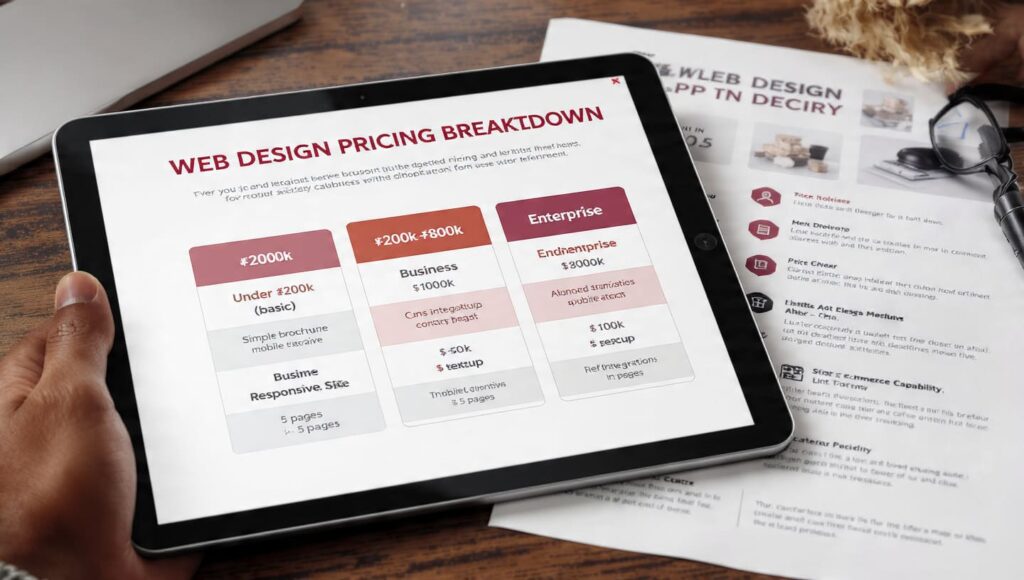
Quote Under N200,000
When you see quotes under two hundred thousand naira, you’ve entered what I call the “I Know a Guy” tier.
At this level, you’re getting a template-based site, probably WordPress with a pre-made theme that’s been used on ten thousand other businesses. The developer will set it up in a few days, drop in your logo and colours, and hand it over.
You’ll get the basic pages: Home, About, Services, Contact. Maybe a blog if you ask nicely. What you won’t get is custom features, complex functionality, or any real thought about your business goals. This is the main disadvantage of website design vs templates for Nigerian businesses when you need something unique.
SEO setup will be minimal at best, probably just meta tags thrown in because you asked. And support after launch? That’s you being optimistic. If something breaks, you’ll be lucky to get a response.
Now look, this tier works for some people. If you’re a small business just needing an online presence to say “I exist,” and if you’re running a personal portfolio or a very simple brochure site, there are options for affordable website design for Nigerian startups that might be enough.
If you’re not expecting to make money directly from the site and just need something to point people to, two hundred thousand might do the job. But manage your expectations carefully.
At this price, you’re not getting a strategy. You’re not getting someone who deeply understands your business and customers. What you’re actually getting is a website that exists.
Whether it actually works for your business goals is your problem, not theirs. And that’s fine if you understand that going in.
Quote Between N200,000 – N800,000
The next tier is where things get serious. Between two hundred thousand and eight hundred thousand naira, you’re in the Business-Ready zone.
This is where professional agencies do their best work for companies like yours. At this level, you’re getting custom design, not just templates. The agency will spend time understanding your business through a proper discovery phase.
They’ll build mobile responsiveness from the ground up, not tack it on as an afterthought. Basic SEO gets built into the foundation and content strategy gets discussed.
You’ll have several rounds of revisions to get things right. Post-launch support is included for a limited period, and they’ll actually train you on how to update your own site.
This tier works for most serious SMEs, service businesses, and entrepreneurs who actually want their website to generate results. The agency takes time to understand your goals because they know that a site that works for you leads to referrals and repeat work.
Within this range, the difference between 250,000 and 700,000 usually comes down to a few key factors:
- Complexity: More pages and more features mean more work, which means higher cost.
- Experience level: Teams with proven track records charge more, and usually deliver more.
- Custom functionality: If you need something specific that doesn’t come out of a box, that’s extra.
- E-commerce requirements: Online stores are more complex than brochure sites and cost accordingly.
- Timeline: Rush jobs disrupt agency workflow and cost more because they require priority attention.
All of this is reasonable if you understand what you’re paying for. A seven hundred thousand naira site isn’t necessarily overpriced compared to a two hundred and fifty thousand naira site. It’s just a different product serving different needs.
N800,000+ Above
Above N800,000 you’ve entered the Custom and Enterprise tier.
This is where serious businesses with serious budgets play. At this level, you’re getting custom-built solutions, not off-the-shelf anything. Complex e-commerce platforms with hundreds of products, membership sites with paid content restrictions and custom web applications that do exactly what your business needs.
They agency will take care of Integration with payment gateways, inventory systems, CRMs, full SEO strategy and everything else.
This tier is for established businesses where the website is central to operations. If your business lives and dies by your online presence, this is your zone. If you have complex customer journeys that need careful mapping, this is your zone.
At this price, you’re not just buying a website. You’re buying a business asset designed to generate serious returns over years of operation. The difference between this and cheaper options isn’t just features, it’s strategic thinking, long-term reliability, and the peace of mind that comes from knowing your site won’t break at the worst possible moment.
The Question Nobody Asks But Everyone Should
People will spend hours comparing phone specs before buying a device. They’ll read reviews, watch YouTube videos, and ask friends. But when it comes to spending hundreds of thousands on a website, they forget to ask the most basic question: what am I actually getting for this money?
When you receive quotes from agencies, don’t just look at the bottom line. Ask for a breakdown.
Some of these questions include: How many pages are included? How many rounds of revisions? Is hosting included, and for how long? Is domain registration in the price? Who pays for premium plugins or stock photos if they’re needed? Is SEO setup included or will that cost extra? Do you get training on updating content yourself? What support is included after launch, and for how long exactly? What happens if something breaks in three months, or six months, or a year?
I’ve watched too many business owners pay N300,000 only to discover that hosting wasn’t included, domain renewal costs extra, and the “free support” they were promised lasted exactly one week.
They felt cheated, and honestly they were. But the agency didn’t do anything wrong, the client just never asked. The information was probably in the contract somewhere, buried in fine print.
But who reads fine print when you’re excited about launching your business online?
When Prices Look Wrong
Sometimes a quote will just feel off. Either it is too cheap or too expensive. Your gut starts whispering. Listen to it, but then verify with facts.
When a quote is suspiciously low, like ten times cheaper than everyone else, something is usually wrong under the hood. Maybe they’re using pirated themes and plugins that will get your site hacked eventually.
Maybe they’re cutting every corner on security and performance or maybe they’re outsourcing to someone with minimal experience who’s learning on your project.
And sometimes they’ll take your money and disappear entirely, it happens more often than you’d think in Nigeria. The cheap price isn’t a bargain but a warning.
When a quote is suspiciously high, ask why. Sometimes there’s genuine value there.
Maybe they’re industry specialists with deep experience in your exact type of business, or they’re using enterprise-grade tools and processes. Maybe they’re including things other agencies charge extra for.
A reputable agency will happily explain their pricing, breaking down what you’re paying for and why it matters. If they get defensive or dismissive when you ask, that’s information too.
That tells you something about how they’ll handle your questions during the project.
How to Actually Compare Proposals
When you have multiple quotes sitting on your table, don’t just stare at them hoping clarity will magically appear. Create a simple comparison. Look at each proposal side by side and ask yourself:
- What’s the total price, and what exactly does that include?
- How many pages and features are covered, and what’s considered extra?
- What’s the timeline for completion, and is that realistic for your needs?
- Who’s actually building your site, a team with backup or one person who might disappear?
- What does post-launch support look like, and how long does it last?
When you lay it all out side by side, patterns emerge. One agency might look expensive until you realize they’re including two years of hosting and ongoing support while others charge extra for every phone call. Another agency might look cheap until you add up all the “extras” they’ll bill you for later. The comparison reveals the truth.
The Costs That Keep Coming
The truth is websites never stop costing money. The budget for hiring a website company in Nigeria doesn’t end at launch. It’s just the beginning.
You’ll have domain renewal every year, typically five to fifteen thousand naira depending on your domain extension. Hosting fees come monthly or yearly, anywhere from fifty thousand to two hundred thousand annually for decent Nigerian hosting.
Premium plugins often require yearly licenses. Security updates and maintenance need to happen regularly. Content updates cost if you can’t do them yourself and marketing to drive traffic to your site is an ongoing expense.
Ask each agency about these costs upfront. A good agency will give you a realistic picture of what you’ll spend in year one and year two. An agency that dodges the question or says “nothing else” is either naive or dishonest.
A site that costs two hundred thousand to build might cost one hundred thousand yearly to maintain. You need to know this before you sign, not after you’re committed.
Reading Client Reviews Web Agencies Nigeria & Asking the Right Questions
You’ve made it to the halfway point. You’ve defined your goals, built a shortlist, dissected portfolios, and decoded pricing. Now we enter the truth-telling phase.
A slick portfolio can be faked, beautiful designs can be stolen or bought and pricing can be manipulated. But real client reviews? That’s genuine feedback from people who actually worked with them? Which is harder to fake, and discovery calls? That’s where the mask slips if you know what to look for.
These two steps are your lie detector. Step five shows you where to find honest reviews and how to read them critically while step six gives you the exact questions to ask during your consultation, questions that separate serious agencies from the ones just trying to collect deposits and disappear.
Step 5: Client Reviews, Testimonials & Case Studies for Nigerian Web Designers
The question most people still ask till today is: Where do I find an honest review? Don’t worry because this part reveals places to discover honest reviews.
Where to Find Honest Reviews
Google Business Profile: This is your first stop, look for agencies with verified Google listings. Read the reviews, all of them, not just the five-star ones. Pay attention to how the agency responds to negative reviews.
Do they get defensive and aggressive? Or do they professionally address concerns? How a company handles criticism tells you everything.
Clutch.co: is another platform that verifies reviews. They contact reviewers directly to confirm authenticity. If an agency has reviews on Clutch, especially detailed ones with specific project information, that’s a strong signal.
According to Clutch’s own data, verified reviews are 97% more trustworthy than unverified ones.
LinkedIn Recommendations: Go to the agency’s LinkedIn page. Look at recommendations written for individual team members, not just the company page. People rarely fake recommendations from real connections.
If you see multiple team members with genuine recommendations from past clients, that’s gold.
Nairaland and Tech Forums: I mentioned this before, but it bears repeating. Search for the agency name on Nairaland, especially in the tech section. You’ll find threads where people ask “Has anyone used [Agency Name] before?” The responses are usually brutally honest. Nigerians don’t hold back online. Looking for the best website design companies in Nigeria means looking for brands that have a clean reputation on these forums.
Direct References: This is the big one. Ask the agency for 2–3 clients you can contact directly. Genuine agencies will happily provide this. If they hesitate, make excuses, or only offer written testimonials, alarm bells should ring. You want to ensure you aren’t making common website design mistakes Nigerian businesses often make by not verifying claims.
Pay attention to repeat clients. If the same client has worked with an agency on multiple projects over years, that’s a powerful signal. Businesses don’t keep returning to agencies that disappoint them. This is often a sign of a professional website design in Nigeria that yields actual results.
Also look for long-term retainers. Clients who pay monthly for maintenance and support are clients who trust the agency to keep their business running. That trust isn’t given lightly, especially when dealing with website failures and fixes for Nigerian businesses where ongoing support is critical.
Cross-Reference Everything
Check at least two platforms before forming an opinion. An agency might have great Google reviews but terrible feedback on Nairaland. Or they might have no Google reviews but glowing LinkedIn recommendations. Look for patterns across platforms.
If an agency has great reviews everywhere you check, that’s consistent. If reviews vary wildly, dig deeper.
When you get direct references, ask if you can WhatsApp them. Nigerians are more honest on WhatsApp than on formal calls. A quick “How was your experience with [Agency Name] really?” often yields more truth than scheduled reference calls where the client feels obligated to be polite.
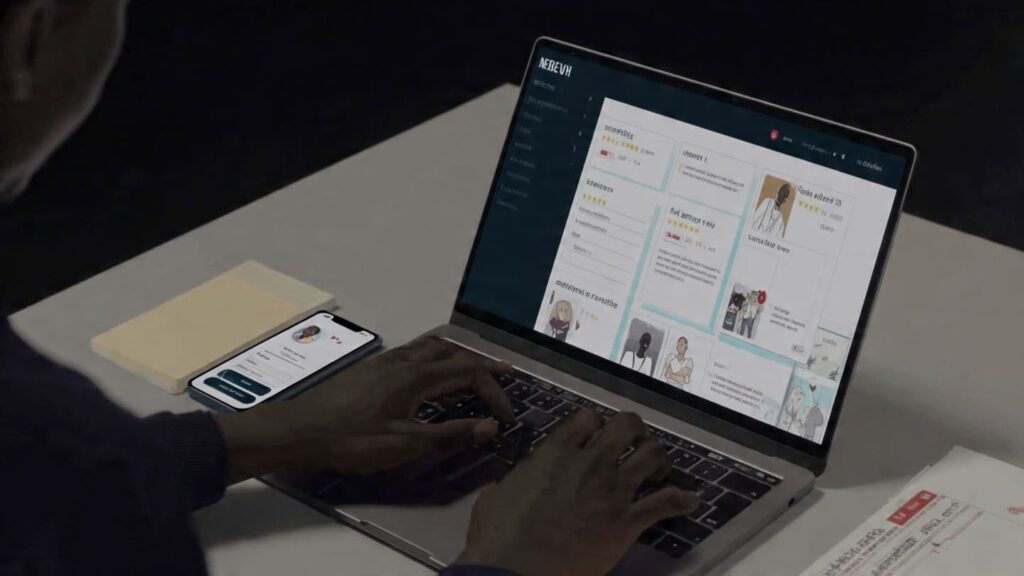
Step 6: Discovery Calls & the 10 Questions Every Nigerian Business Owner Must Ask
You’ve done your research. The reviews check out. Now you’re on a call with the agency. This is where the real vetting happens.
Most people go into these calls unprepared. They ask vague questions like “So, how do you work?” and get vague answers. They come out more confused than when they went in.
Not you at least. After reading this article you’re going in with a list.
Here are few questions to keep top of mind:
Question 1: “Who specifically will be building my website?”
This is the most important question nobody asks.
Many agencies sell you on their “team of experts” but then outsource the actual work to freelancers or junior developers you never meet.
The person you’re talking to, the smooth-talking account manager, might never touch your project.
Ask for names. Ask to meet the actual developers who will build your site. If they hesitate or give vague answers, that’s a problem.
Question 2: “What does your revision process look like, and how many rounds are included?”
Revisions are where projects die. You request changes, they make them, you request more, they make more. Without clear boundaries, this cycle never ends.
Good agencies define revision rounds upfront: “You get two rounds of revisions on design, then two rounds on development. Additional revisions are charged at ₦X per hour.” This protects both of you.
If an agency says “unlimited revisions,” be suspicious. Unlimited usually means unmanaged. And unmanaged means your project never launches.
Question 3: “Can I see your most recently completed project for a business like mine?”
You’re not asking about their best project or their award-winning project. What you need is their most recent project in your industry.
Recent projects matter because web design evolves. A site they built in 2022 might look dated by 2025 standards. Recent work shows you their current capabilities.
Industry match matters because different businesses need different things. An agency that builds beautiful restaurant sites might struggle with your complex e-commerce requirements.
Question 4: “What happens if I’m not satisfied with the final product?”
This question makes people uncomfortable, but ask it anyway.
A professional agency will have a clear process for addressing dissatisfaction. Maybe additional revisions, a partial refund if they’ve clearly failed to deliver what was promised and an arbitration process might be provided as a compensation plan.
If an agency says “That never happens” or gets defensive, run. Things go wrong sometimes. How they handle it matters more than pretending problems don’t exist.
Question 5: “How do you handle SEO setup, site speed, and mobile responsiveness as standard?”
These shouldn’t be extras. They should be baked into every project.
Ask specifically: “Is SEO included in your standard package, or is it an add-on? Do you guarantee mobile responsiveness? What steps do you take to ensure fast loading speeds?”
According to Google, 53% of mobile users abandon sites that take longer than three seconds to load. If an agency isn’t actively optimizing for speed, they’re building sites that lose customers.
Let’s do what’s necessary to achieve the best result.
Question 6: “What’s your typical turnaround time from deposit to live launch?”
Notice I said “typical,” not “promised.” You want their honest estimate based on real projects, not their ideal timeline.
Then ask: “What delays projects most often, and how do you prevent those delays?” This reveals their project management approach. Good agencies have systems to prevent common delays. Bad agencies blame clients when things go wrong.
Question 7: “Who owns the code and content after the project ends?”
This is very vital because some agencies retain ownership and “license” the site to you. If you leave them, you lose everything.
You should own:
- The code (unless it’s a platform like Shopify where licensing is standard)
- All content (text, images, videos)
- All login credentials (hosting, domain, admin accounts)
If an agency hesitates on ownership, that’s a major red flag. You’re paying for a website. It should be yours.
Question 8: “What happens if we need changes after launch: what are your rates and availability?”
Websites aren’t static. You’ll need changes in new products, new services, and new content.
Ask about post-launch support. Do they offer retainer packages? Hourly rates? Response times for urgent fixes? Some agencies disappear after collecting final payment. Good ones stay available.
Question 9: “Do you provide training on how to update the site myself?”
Unless you want to pay someone every time you need to change a price or add a blog post, you need to know how to update the site yourself.
Ask if training is included. Is it a one-hour video call? Written documentation? Ongoing support? Some agencies build sites so complicated you can’t touch them without breaking something.
That’s by design, so you keep paying them. Avoid those agencies.
Question 10: “Can we set up a shared communication channel: WhatsApp group, Trello, Notion, from day one?”
Communication makes or breaks web projects. Email letters get lost and phone calls get forgotten. You need a central place where everyone can track progress, share files, and ask questions.
Good agencies will welcome this. They want clear communication as much as you do. Bad agencies will resist, preferring to keep you at arm’s length.
After you ask these questions, pay attention to how you feel.
Do they answer directly, or do they dance around? Do they seem genuinely interested in your business, or are they just trying to close a sale? Do they explain things clearly, or do they use jargon to make you feel small?
Your gut is telling you something. Listen to it.
How to Hire the Right Web Design Company Nigeria Confidently
Now, the goals are clear, the shortlist is ready, portfolios have been dissected, costs have been compared, reviews have been read and discovery calls are complete.
Then comes the moment of truth: making the final decision.
This is where most people freeze. They have three good agencies in front of them, each with strengths and weaknesses, and suddenly the clarity they fought for disappears.
Analysis paralysis sets in. They delay, overthink and sometimes, they end up going with the wrong choice simply because they couldn’t make a decision at all.
Step seven gives you a simple framework to break the paralysis and choose with confidence.
Step 7: Comparing Final Proposals & Making Your Hiring Decision
My friend Yemi runs a beauty supply business in Surulere. When she decided to build an e-commerce site, she did everything right. Defined her goals, researched agencies, reviewed portfolios, and asked the right questions.
She narrowed it down to two agencies, both excellent, both capable, and both with incredible reviews.
Then she froze.
For three weeks, she went back and forth. Agency A had slightly better designs. Agency B had slightly better prices. Agency A communicated faster. Agency B offered more post-launch support.
Every time she decided, she second-guessed herself. She’d wake up at night thinking about it. She asked everyone she knew for opinions until their voices blurred into noise.
Finally, I sat her down and said, “Let’s stop guessing and start scoring.” We created a simple system that cut through the confusion. Twenty minutes later, she had her answer.
She hired Agency B, launched her site two months later, and her business has grown 200 percent since. The system worked because it replaced emotion with evaluation.
The process of scoring the right agency is simple and if you’ve read up to this point, it shows you’re in for business.
Without wasting time, let’s dive in.
1. The Scoring Method That Ends Confusion
Instead of agonizing over which agency feels better, create a simple scoring system. Think of it like judging a competition where you already know the prizes you care about most.
Start with what matters to you. For most businesses, four things determine success:
- The quality of the work
- The fairness of the price,
- What past clients say
- How well the agency communicates.
These aren’t the only factors, but they’re the ones that predict whether your project will succeed or fail.
Give each category a weight based on what matters most to you. If design excellence is everything, make portfolio quality worth more. If the budget is tight, price fairness carries heavier weight. There’s no wrong answer here, only honesty about your priorities.
Then score each agency from one to ten in every category. Not based on feelings, but based on evidence. What did their past sites actually look like on your phone? How did their website design cost in Nigeria compare to what’s included? What did their references really say when you called? How quickly did they respond to your emails?
When Yemi did this, something interesting happened. Agency A had higher portfolio scores, their work was genuinely beautiful, the kind of sites that win awards. But Agency B scored higher on communication and client feedback.
Their references didn’t just say “they were good”, they said things like “they answered my calls at 9pm when something broke” and “they explained things until I understood.”
When she added the weighted scores, Agency B came out ahead by 12 percent. That twelve percent wasn’t about design, it was about reliability. It was the difference between a website that looks like art and a website that actually works, backed by people who know how to handle website failures and fixes for Nigerian businesses when things go wrong. She made her choice confidently and never looked back.
2. Why Cheap Costs More in the Long Run
I need to hammer this point home because Nigerians love a bargain. We’re raised to find the best price, negotiate hard, and feel like winners when we pay less.
Our mothers taught us to argue intensely at the market until the seller surrenders. That instinct serves us well for tomatoes and wrappers.
For websites? It will destroy you.
The cheapest option is almost never the best option. Not because expensive automatically means good, it doesn’t. But because web design is one of those things where cutting corners costs you more in the long run than you could possibly save today.
Think about it like buying shoes for a long journey. You can buy cheap slippers for N1,500 that last three months. Or you can buy quality leather shoes for N25,000 that last five years.
The cheap slippers are easier on your pocket today, but over five years, you’ll buy twenty pairs. You’ll spend more money and walk through life with aching feet.
Same with websites. A cheap site built with pirated themes, stolen plugins, no security protocols, and zero post-launch support might cost one hundred and fifty thousand now. It looks like a bargain on paper.
But when it gets hacked three months later because the agency used nulled software, you’ll pay to fix it. When it breaks during your biggest sales season and your customers can’t buy, you’ll lose revenue.
When you finally realize it doesn’t work on mobile and half your visitors can’t use it, you’ll pay to rebuild it from scratch.
The quality site at N600,000 that works, converts, and stays secure with a team that answers when you call? That’s not an expense. That’s an investment with returns that compound every single day.
3. Why Expensive Doesn’t Guarantee Excellence
But don’t swing too far the other way. Some agencies charge premium rates simply because they can, because they have a glass office in Lekki Phase One, they’ve worked with multinational brands you recognize, and their name carries weight in industry circles.
That doesn’t mean they’re right for your small business or your specific needs.
I’ve seen too many business owners walk into fancy agencies, get intimidated by the surroundings, and sign checks they couldn’t afford for services they didn’t need.
They assumed that high price meant high quality. Sometimes it does. But sometimes it means you’re paying for the agency’s overhead, their marketing budget, and their founder’s Mercedes.
A big agency might assign your project to their most junior team member while you pay senior rates. A boutique agency run by someone who’s been building sites for a decade might give you the founder’s personal attention for half the price.
Size isn’t quality. Attention to you is quality and experience solving problems like yours is quality. The willingness to answer your calls at six in the evening when something confuses you, that’s quality.
4. What Actually Predicts a Successful Partnership
After watching dozens of business owners navigate this decision, I’ve noticed patterns. The ones who end up happy with their choice don’t necessarily pick the agency with the best portfolio or the lowest price. They pick based on three things that matter more than anything else.
First, they choose the agency that asks the best questions. This is the hallmark of professional website design in Nigeria. The agency that challenges them, pushes back on assumptions, and shows genuine curiosity about their business.
The yes-men who agree with everything during the sales call? They’ll build exactly what you asked for, even when what you asked for won’t work. The agency that argues with you a little, and says “have you considered this instead,” and probes deeper than you expected, that’s the agency that will build a conversion-optimized website for Nigerian businesses that actually serves your goals.
Second, they choose the agency that communicates clearly from day one. If they explain technical concepts in plain English during the sales process, they’ll do the same during the project.
If they respond to emails within hours, they’ll respond when something breaks after launch. If they make you feel heard and valued before you’ve paid, they’ll treat you like a partner after. Sales is always a preview of delivery. This is why you must choose web design agencies in Nigeria based on their reliability and communication. Pay attention to that preview.
Third, they choose the agency with relevant experience. Not generic experience building websites for everyone, specific experience building for businesses like theirs.
An agency that has built successful sites for retailers understands retail customers. They know that product photos need to zoom, checkout needs to be simple, and shipping information needs to be obvious.
You don’t have to teach them your industry from scratch. That shared understanding saves time, money, and countless misunderstandings.
5. What Your Contract Must Include
Before you sign anything, read every word of that contract. Not with optimistic eyes that assume the best but with suspicious eyes that look for gaps.
The contract should state clearly that after final payment, you own everything, the code, the design, the content, and the login credentials. Some agencies try to retain ownership and license the site to you like you’re renting it.
That means if you ever leave them, you leave with nothing. Your site stays with them. Never accept this arrangement. You’re paying for a website. It should be yours.
The contract should spell out exactly what you’re getting.
- How many pages?
- How many rounds of revisions?
- What happens if you need more?
- What support is included after launch, and for how long?
- What’s not included that might cost extra later?
Every ambiguity in the contract is a future argument waiting to happen.
The payment schedule should make sense. Industry standard in Nigeria is 50% upfront, twenty-five percent at a midpoint milestone, and twenty-five percent on completion and approval.
Anything above 70% before work starts should concern you. Anyone demanding full payment upfront should be crossed off your list immediately, no matter how good their portfolio looks.
And there should be a termination clause. What happens if you need to end the project early? What do you pay for work already done? What do you receive?
Hope you never need this, but have it in writing anyway.
6. The Kick-Off Meeting That Sets the Tone
After you sign, before work begins, request a proper kick-off meeting. This isn’t just a formality, it’s where successful projects are born.
In that meeting, go through everything. The timeline with specific dates, not vague estimates. Who does what and by when.
What you need to provide and when they need it. How often you’ll meet to review progress. What communication looks like day to day. What happens if something goes wrong?
This is also when you provide everything they need to start. Your logo files in the right formats, brand colors and fonts, product photos (descriptions) and your content, written and ready. The more you provide upfront, the faster they can work and the less you’ll pay in revision rounds later.
Agencies love clients who come prepared. Those clients get better results because the agency can focus on building instead of chasing you for materials. Be that client.
Post-Hire: Onboarding, Collaboration & Getting the Most From Your Agency Relationship
Congratulations. You’ve made your choice.
You’ve signed the contract, and paid the deposit. The hard part is over, right? Not exactly.
The hard part is just beginning, but if you do it right, it will be the most rewarding part of the journey.
The next thirty days will determine whether your project soars or stumbles. I’ve watched too many well-chosen agencies fail because clients disappeared after signing.
They paid their money, went on relaxing, and expected magic to happen. When the agency asked for feedback, they took days to respond. When the agency needed content, they hadn’t written it yet. When the agency delivered designs, they had no time to review properly.
Don’t be that client. It’s better to be safe than sorry so instead here’s what to do.
Set Up Communication That Actually Works
From day one, establish how you’ll talk. Not through scattered emails that get lost in spam folders. Or through phone calls where nothing gets documented.
It should be in a central place where everything lives, such as questions, answers, files, and feedback.
WhatsApp groups work well for Nigerian projects because we’re all on WhatsApp anyway. Quick questions get answered fast and files get shared easily. But WhatsApp can become chaotic if not managed.
Consider supplementing it with something more organized, like Trello for tracking tasks, Notion for shared documents, and Google Drive for files.
The key is transparency. Everyone should see everything. There should be no private conversations between the agency and one stakeholder while others stay in the dark.
No decisions should be made in isolation. When communication is open, mistakes get caught early, questions get answered quickly, and everyone moves in the same direction.
Give Them Everything They Need Right Now
The fastest way to delay your project is to drip-feed materials. Which means sending your logo today, product photos next week, and your content next month. Every time you pause, the agency pauses too.
They can’t build pages without words. They can’t design layouts without knowing what goes in them.
Before the project starts, gather everything in one place. Your logo in all formats, PNG, SVG, the original design files if you have them. Your brand colors with hex codes, not vague descriptions like “that blue we like.” Your fonts, brand voice guidelines, your competitor examples, and a must-have features list.
If content isn’t ready, be honest about when it will be. Agencies can work around missing content by using placeholders, but they need to know what’s coming and when.
A realistic timeline with honest dates beats optimistic promises that crumble on arrival.
The Post-Launch Checklist Nobody Tells You About
When the agency announces your site is ready, don’t just say “looks good, launch it.” Test everything. Not casually, but systematically.
Open the site on three different browsers. Chrome, Firefox, Safari at minimum. Does everything work the same way? Sometimes code that works perfectly in Chrome breaks in Safari. Better to discover this before your customers do.
Test on three different devices. A laptop, a tablet, a phone. Hold that phone in your hand and navigate your site exactly as a customer would. To ensure you have a mobile responsive design in Nigeria, check if you can read the text without zooming. Can you tap buttons without accidentally tapping something else? Does the checkout work smoothly on a small screen?
Click every link. Every menu item, every button, every “learn more.” Do they all go where they should? Nothing frustrates customers like broken links that lead nowhere. This is a critical step to avoid common website design mistakes for Nigerian businesses before the official launch.
Fill out every form. Contact forms, newsletter signups, order forms. Submit them. Does the information go where it should? Do you get confirmation emails? Do your customers get receipts?
Test payment gateways if you’re selling online. Run a test transaction. Refund it immediately. Does the whole process work without errors? Payment problems lose sales instantly.
Check images on slow connections. Turn on your phone’s data, go somewhere with a weak signal, and load your site. Do images take forever? Does the layout break? Many beautiful sites designed on fiber connections become unusable on Nigeria’s variable networks.
When Things Go Wrong and They Will
Despite everyone’s best efforts, something will eventually go wrong. A plugin will conflict with an update. Hosting will have an outage, and a hacker will attempt to break in. This is normal. This is why you chose a good agency instead of a random freelancer.
When problems happen, don’t panic. Contact your agency through your established channels and give them the information they need to diagnose the issue. Be patient but hold them accountable.
A good agency fixes problems quickly while a great agency explains what happened and how they’ll prevent it from happening again.
If problems keep happening and your agency stops responding, you made the wrong choice. Learn from it, cut ties, and find someone better. But if you followed this guide carefully, that scenario is much less likely.
How do you confidently choose the right web design agency in Nigeria?
You made it. Seven steps from confusion to clarity, from random Googling to confident decision-making.
Let me remind you of what you’ve learned.
You start by defining your goals, because you cannot outsource clarity to people who can’t read your mind. Then you create a shortlist by looking beyond Google’s first page to find the agencies actually delivering quality work.
After that, you review portfolios with detective eyes, looking past pretty pictures to find sites that actually work on mobile and load fast. You decode pricing to understand what different budgets actually buy in Nigeria today.
Next, you read client reviews across multiple platforms, verifying claims instead of accepting them. You ask the ten questions that separate serious agencies from smooth talkers. Then compare final proposals using a scoring system that replaces emotion with evidence. And now you know how to onboard properly and set your project up for success.
The best web design agencies Nigeria has to offer aren’t necessarily the biggest or the most expensive. They’re the ones that align with your goals, communicate clearly when things go wrong, and deliver results with accountability.
They’re the agencies that ask hard questions before taking your money. They’re the ones whose past clients say, “they answered my calls at night” instead of just “great work.”
Keep this guide somewhere you can find it. Bookmark it, save it, share it with friends who are about to make the same journey. The next time you need a website, or the time after that, because your business will grow and your needs will change, and you won’t have to learn everything from scratch.
You’ll have a system that works.
Which step surprised you most? Was it the portfolio review process? The pricing breakdown? The questions you should ask on discovery calls? Drop your experience in the comments below. Your story might help someone else avoid the mistakes you almost made.
And if you’re tired of reading and ready for action, if you want to work with a team that actually answers when you call and builds sites that generate revenue instead of just looking pretty, Sizzle Digital is here.
FAQs
Web design pricing in Nigeria varies widely depending on what you need. For a basic brochure site with five to seven pages, you’re looking at anywhere from ₦150,000 to ₦300,000. This gets you a template-based design, basic mobile responsiveness, and minimal customization. For business-ready sites with custom design, proper SEO setup, and e-commerce functionality, prices typically range from ₦350,000 to ₦800,000. At this level, agencies spend time understanding your business and building something tailored to your goals. For enterprise-level projects with complex functionality, custom applications, or large e-commerce platforms, prices start at ₦800,000 and can go well into millions. Remember that cheap sites often cost more in the long run through redesigns and lost sales. Always ask for a detailed breakdown of what’s included so you’re comparing apples to apples.
A simple website typically takes three to six weeks from start to finish. This includes discovery and planning, design mockups, development, content population, testing, and launch. More complex sites with e-commerce functionality, custom features, or lots of content can take two to four months. The timeline depends heavily on how quickly you provide feedback and content. If you take two weeks to review designs and another two weeks to send product photos, your project will stretch accordingly. Be wary of agencies promising complex sites in two weeks, they’re either cutting corners or about to disappoint you. Also build in buffer time for unexpected delays. Network issues, power outages, and “my system is down” are real in Nigeria. A realistic agency will account for this. Ask for their typical timeline based on similar projects, not their ideal scenario.
A freelancer is one person handling everything, design, development, project management, and support. This can work well for simple projects and tight budgets, but you’re betting on that one person’s availability and skills. If they fall sick, travel, or get overwhelmed with other clients, your project stalls. An agency has a team with specialized roles, designers who design, developers who code, project managers who keep things moving. When someone is unavailable, someone else steps in. Agencies also typically have more robust processes, better security practices, and ongoing support structures. The trade-off is cost. Agencies cost more because you’re paying for a team, not an individual. For serious business websites where reliability matters, an agency is usually worth the extra investment. For simple personal sites or experiments, a good freelancer might suffice.
Yes, some upfront payment is standard in Nigeria, typically fifty percent before work begins. This protects the agency from clients who change their minds or disappear after work is done. But be very careful with how much you pay upfront. Anything above seventy percent before work starts is a major red flag. Never pay one hundred percent upfront, no matter how good their story sounds. A reputable agency will have a clear payment schedule tied to milestones: fifty percent to start, twenty-five percent after design approval, twenty-five percent on completion and launch. This protects both of you. You’re not paying for everything before seeing anything, and they’re not working for free. If an agency demands full payment upfront, walk away. There are plenty of legitimate agencies that won’t ask for this.
Start with their physical presence. Do they have a verifiable office address, not just a PO box? Can you find their team on LinkedIn with real profiles and work history? Check their registration with the Corporate Affairs Commission, any serious agency will be properly registered. Look at their own website critically. If an agency selling websites has a slow, poorly designed, or broken site, that tells you everything. Read reviews across multiple platforms, Google, Clutch.co, LinkedIn, even Nairaland. Look for patterns, not just star ratings. Ask for references you can call or WhatsApp. A legitimate agency will happily connect you with past clients. If they hesitate or only offer written testimonials, be suspicious. Also check how long they’ve been in business. Agencies that survive five years or more in Nigeria’s competitive space are usually doing something right.
Don’t just look at beauty, look for functionality. Open every portfolio site on your phone. If it breaks or looks terrible, that agency doesn’t prioritize mobile users, even though over seventy percent of Nigerian traffic comes from mobile. Test loading speed using tools like GTmetrix. Slow sites lose customers. Look for clear calls to action, easy navigation, and contact information that’s simple to find. Check if the sites are actually live and maintained, not just screenshots of projects that never launched. Pay attention to variety. If every site looks identical, they might be using templates and calling it custom. Also look for relevance to your industry. An agency that’s built successful e-commerce sites understands e-commerce challenges. An agency that mostly builds blogs might struggle with your online store. Ask to see their most recent work, not just their greatest hits from years ago.
Absolutely. SEO isn’t a luxury, it’s essential. If your website is built without SEO in mind, it’s like opening a shop in the middle of the forest and wondering why nobody visits. Basic SEO should be baked into every professional website build: proper site structure, fast loading speeds, mobile responsiveness, clean code, meta tags, and keyword optimization. Without these fundamentals, your site won’t rank on Google no matter how beautiful it looks. Some agencies treat SEO as an expensive add-on. Good agencies build it in from the start. Ask specifically what SEO work is included in your package. If the answer is vague or “we can discuss that later,” push for clarity. According to research, seventy-five percent of users never scroll past the first page of search results. If your site isn’t optimized, you’re invisible to customers actively looking for what you sell.
A professional agency will have a revision process built into your agreement. Typically this includes two to three rounds of changes on design mockups before development begins. If you’re still unhappy after those rounds, you should be able to discuss concerns and potentially extend revisions at an agreed cost. The key is having this clarity before you sign. The contract should spell out how many revisions are included and what happens when you exceed them. If you’re genuinely unhappy because the agency completely missed your brief despite clear communication, that’s a different conversation. A reputable agency will work to make it right because their reputation matters. But if you kept approving designs along the way and only complained at the end, that’s partly on you. Stay engaged throughout the process, give feedback promptly, and speak up early when something feels wrong.
You of course. After final payment, you should own everything, the code, the design, the content, the login credentials. Some agencies try to retain ownership and license the site to you like you’re renting it. Never accept this. You’re paying for a website. It should be yours completely. This includes the domain name registration, which should be in your name under your email, not the agency’s. It includes hosting accounts, which you should control even if the agency manages them for you. If you ever need to switch agencies or bring work in-house, you should be able to do so without losing your site. Read your contract carefully for ownership clauses. If anything is unclear, ask for clarification before signing. A legitimate agency has nothing to hide and will happily confirm that you own your digital property.
That depends on what was built. If your site uses a content management system like WordPress, you should be able to update text, add blog posts, and change photos with minimal training. A good agency will provide this training as part of your package, showing you how to log in, where to find things, and what not to touch. If your site is custom-built without a CMS, updates might require developer assistance every time. Ask about this before you sign. Some agencies intentionally build sites that are difficult to update so you’ll keep paying them for every small change. Avoid those agencies. You should have reasonable control over your own content. At minimum, you should be able to update text and images without calling a developer. More complex changes like design overhauls or new features will naturally require professional help, and that’s fine.
There’s no universal answer, it depends on what you need. WordPress powers over forty percent of all websites globally. It’s flexible, has thousands of plugins, and most Nigerian developers know it well. Great for blogs, business sites, and even e-commerce with WooCommerce. But it requires regular updates and maintenance. Shopify is specifically for selling products. It handles payments, inventory, and shipping out of the box. You pay a monthly fee, but you get less flexibility than WordPress. Perfect for product-based businesses that want to start selling quickly. Custom development means building from scratch. Maximum flexibility, minimum restrictions. Also maximum cost and development time. Only go this route if you have very specific needs that off-the-shelf solutions can’t handle, or if you have a serious budget and want something truly unique. A good agency will recommend the right tool for your specific situation, not whatever they’re most comfortable with.
Any professional agency should build mobile-first by default. That means they design for small screens first, then scale up to larger screens. In Nigeria where over seventy percent of traffic comes from mobile devices, this isn’t optional, it’s essential. Before hiring, test their portfolio sites on your phone. Do they load properly? Can you read text without zooming? Can you tap buttons without accidentally hitting something else? Does navigation make sense on a small screen? If their past work fails these tests, your site will too. Ask specifically about their mobile approach during discovery calls. If they say “we make sure sites work on mobile” without details, push for specifics. A good agency will explain their process, show you examples, and demonstrate that mobile users are central to their thinking, not an afterthought.
Your website isn’t a one-time expense. You’ll have domain renewal fees every year, typically five to fifteen thousand naira depending on the extension. Hosting costs monthly or yearly, ranging from fifty thousand to two hundred thousand naira annually for good Nigerian hosting. Premium plugins or themes might require yearly licenses. Security updates and maintenance should happen regularly, either you learn to do this or you pay someone. Content updates will cost if you need help. Marketing and SEO are ongoing if you want people to find your site. Ask potential agencies about these costs upfront. A transparent agency will give you a realistic picture of what you’ll spend in year one and year two. An agency that dodges the question or says “nothing else” is either naive or dishonest. Budget for ongoing costs from the beginning so you’re not surprised later.
Start with the methods in this guide: LinkedIn searches, Nairaland tech forums, referrals from businesses with working websites, and directories like Clutch.co. Don’t rely on Google’s first page alone, those results are often paid ads or SEO-optimized, not necessarily the best agencies. When you find candidates, verify everything. Check their own website critically. Read reviews across multiple platforms. Ask for references and actually call them. Look for agencies that have been in business for several years, survival in Nigeria’s competitive space means something. Pay attention to communication during initial contact. If they respond slowly or vaguely before you’ve paid, imagine how they’ll respond after. Trust your gut but verify with evidence. A reliable agency isn’t just skilled, they’re responsive, transparent, and treat you like a partner, not a paycheck.
Ask who specifically will build your site, meet the actual team if possible. Ask about their revision process and how many rounds are included. Ask to see their most recently completed project for a business like yours, not just their greatest hits. Ask what happens if you’re not satisfied with the final product. Ask how they handle SEO, site speed, and mobile responsiveness as standard features, not extras. Ask for typical turnaround time based on real projects, not ideal scenarios. Ask who owns the code and content after completion. Ask about post-launch support, what’s included, for how long, and what costs extra. Ask if they provide training on updating the site yourself. Ask about communication channels and how often you’ll receive updates. Write these questions down and take notes during calls. Compare answers across agencies. The agency that answers clearly, honestly, and without defensiveness is usually the one you can trust.
Honestly? For a serious business website, probably not. At ₦100,000, you’re in the “I know a guy” territory, which only gets template sites, minimal customization, and basic features. You might get something that exists online, but it likely won’t be optimized for conversions, mobile performance, or search engines. The developer probably won’t spend time understanding your business goals or target audience. Support after launch will be minimal. For a personal blog or very simple brochure site, this might work. For a business expecting to generate revenue, attract customers, or build credibility, you’ll likely need to invest more. Think of it this way: a ₦100,000 site that generates nothing is expensive. A ₦500,000 site that generates millions in sales is cheap. Focus on value and return on investment, not just the lowest price.
Several red flags should trigger your scam radar. If an agency demands full payment upfront before any work, walk away. If they have no verifiable physical address or their office doesn’t exist when you try to visit, be suspicious. If their portfolio consists entirely of screenshots without links to live sites, they might be showing work they didn’t actually build. If reviews are all five stars with generic praise and no specifics, they might be fake. If they pressure you to decide immediately with “limited time offers,” that’s high-pressure sales tactics. If they can’t or won’t provide references you can actually call, something’s wrong. If communication is consistently vague and they avoid direct answers, trust your gut. Legitimate agencies are transparent, patient, and happy to answer questions. Scammers rush you, hide details, and disappear after payment.
Yes, absolutely, without exception, never negotiate this. A contract protects both you and the agency. It should spell out exactly what you’re getting, how much it costs, when payments are due, how revisions work, who owns what, and what happens if things go wrong. If an agency says “we don’t use contracts, we work on trust,” run. Trust is important, but contracts are what you fall back on when trust breaks down. Read the contract carefully before signing. If anything is unclear, ask for clarification. If important things are missing, like ownership clauses or revision limits, ask for them to be added. A legitimate agency has nothing to hide and will welcome your attention to detail. An agency that resists putting things in writing is telling you something important about how they do business.
Establish a central communication channel from day one. WhatsApp groups work well for quick questions and updates in Nigeria. But don’t rely on WhatsApp alone for everything, important decisions and feedback can get lost in busy chats. Supplement with something more organized. Trello boards help track tasks and progress. Notion works for shared documents and project plans. Google Drive handles file sharing. Email provides a paper trail for formal approvals. The key is transparency. Everyone should see everything. Avoid private side conversations between one stakeholder and the agency while others stay in the dark. Schedule regular check-in calls, weekly during active development. During these calls, review progress, address questions, and confirm next steps. Between calls, let them work. Constant interruptions slow projects down. A structured communication rhythm keeps everyone aligned without overwhelming anyone.
Success depends on what you defined in step one. If your goal was phone calls, track how many calls come from your site. If it was sales, track revenue generated. If it was leads, count form submissions. Set up analytics from day one, Google Analytics is free and essential. Track where visitors come from, what they do on your site, and where they leave. Monitor conversion rates: what percentage of visitors take the action you want. Watch loading speeds and mobile performance. Ask customers how they found you and what they thought of your site. Compare your site’s performance to your old site or to competitors. But remember that websites aren’t magic. They need promotion, content updates, and ongoing attention. A successful site is part of your business system, not a replacement for it. If you’re generating consistent leads or sales and your investment is paying for itself, that’s success.